What did Hubble really discover? Why does redshift imply an expanding universe? Why is the night sky dark?

Ask a Spaceman!
You've got questions and astrophysicist Paul Sutter has the answers - every episode you will come closer to COMPLETE KNOWLEDGE OF TIME AND SPACE!
What did Hubble really discover? Why does redshift imply an expanding universe? Why is the night sky dark?
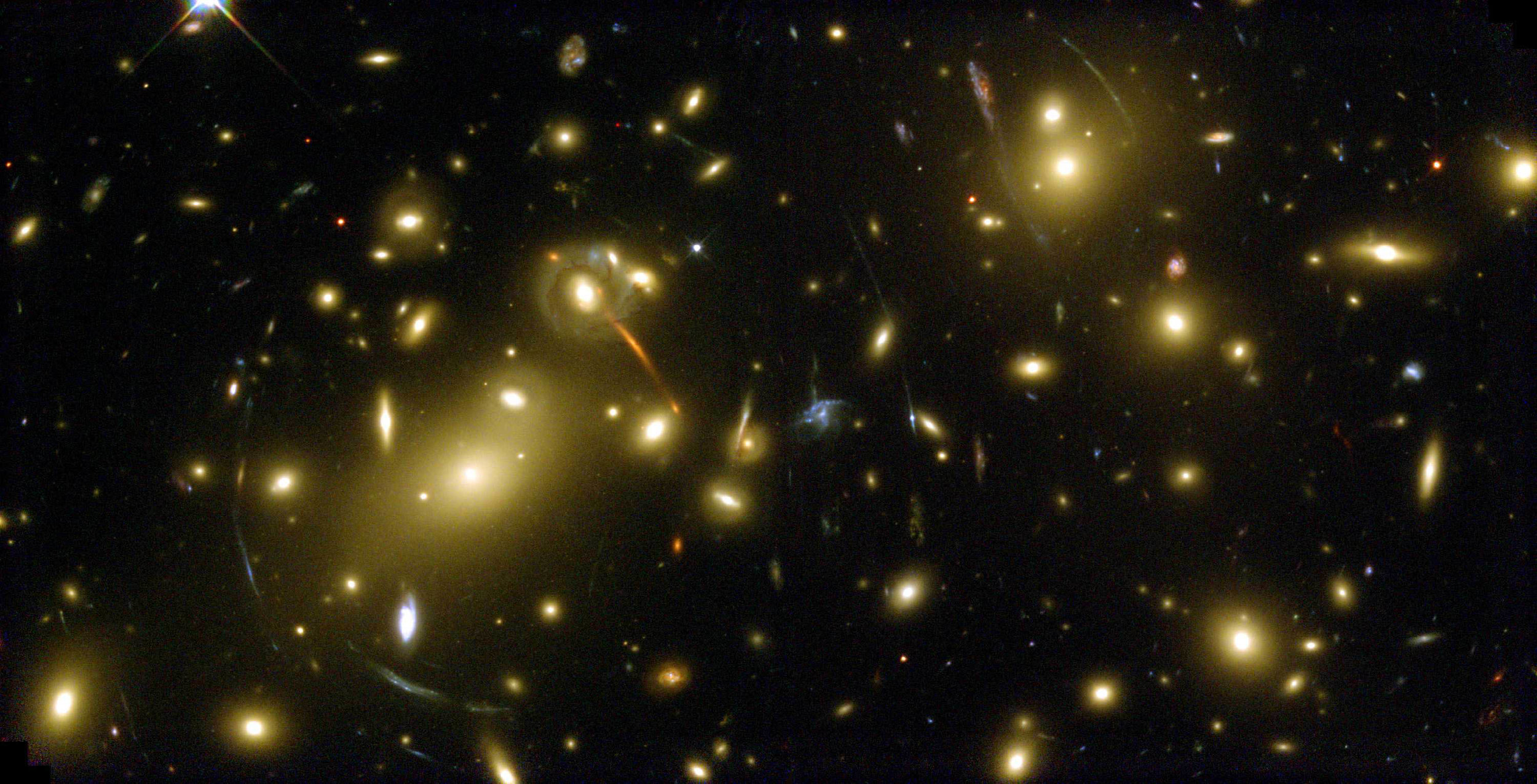
How does gravity bend the path of light? Does it seriously act like a lens or is that just a metaphor? What does it take, and how do we know? What can we learn from this strange physics? I discuss these questions and more in today’s Ask a Spaceman!
Support the show: http://www.patreon.com/pmsutter
All episodes: http://www.AskASpaceman.com
Follow on Twitter: http://www.twitter.com/PaulMattSutter
Like on Facebook: http://www.facebook.com/PaulMattSutter
Watch on YouTube: http://www.youtube.com/PaulMSutter
Go on an adventure: http://www.AstroTours.co
Keep those questions about space, science, astronomy, astrophysics, physics, and cosmology coming to #AskASpaceman for COMPLETE KNOWLEDGE OF TIME AND SPACE!
Big thanks to my top Patreon supporters this month: Justin G., Matthew K., Kevin O., Justin R., Chris C., Helge B., Tim R., SkyDiving Storm Trooper, Lars H., Khaled T., Raymond S., John F., Anilavadhanula, Mark R., and David B.!
Music by Jason Grady and Nick Bain. Thanks to WCBE Radio for hosting the recording session, Greg Mobius for producing, and Cathy Rinella for editing.
Hosted by Paul M. Sutter, astrophysicist at The Ohio State University, Chief Scientist at COSI Science Center, and the one and only Agent to the Stars (http://www.pmsutter.com).
All Episodes | Support | iTunes | Google Play | YouTube
EPISODE TRANSCRIPTION (AUTO-GENERATED)
You're at a picnic and you see an ant crawling along the blanket over all the little hills and valleys because your blanket isn't perfectly flat. The ant knows exactly where it wants to go. It sees the strawberry or the pickle sandwich, or I'm not exactly sure about what you pack for a picnic, but you get the idea. The ant thinks it's going in a straight line. It knows. It saw the strawberry in the distance, and it's going to go right for it. No hesitation. But. It's forced to follow the contours of the blanket. It has to go up, down, maybe sideways. It's making a beeline for the food, but the blanket makes it follow an ant line. Get it? No? Nobody? Okay, well, you know what? Either way, good jokes or bad jokes, you should contribute to Patreon. Go to patreon.com slash pmsutter to learn how you can keep all this outreach going. Maybe... If more people contributed to Patreon, I would be able to write better jokes. But you know what? This is all you're going to get. Actually, I'm just kidding.
All of you are incredibly generous, and I appreciate all the support. That's patreon.com slash bmzutter. The word of the day that we all need to come away from this episode with is geodesic. Geodesic. You may have heard that word before in other contexts. Like if you think about airlines and flights and the path that a flight will take, it connects one city to another. Say you're leaving from New York and you want to go to Paris. a straight line in three dimensions a straight line in three dimensions would send you in a tunnel through the earth that's not exactly feasible so instead we're going to stick to the surface of the earth and we're going to follow we're just we're going to set our compass heading and the plane is going one direction it's not going to turn left it's not going to turn right it's going to go right to paris but then when i look at that in three dimensions it's a curved path Because the plane has to follow the surface of the Earth, because it's not going to go off into space, and it's not going to start digging through the rocks and the dirt in the ocean.
It's going to follow a straight line, but the Earth is curved, so it's going to follow a kind of straight line. It's going to follow what we call a geodesic. In cartography, in flights, these are also called great circle roots. The straightest line possible. I guess the definition of geodesic. And you can extend this from thinking about just the surface of the Earth in a globe to anything. Like the ant crawling along the surface of a very complicated blanket. It may not turn left or turn right, but it still has to go up and down. It has to follow all the contours. Geodesic. A definition I like to have in my head is a line that is as straight as possible under the circumstances. A line that is as straight as possible under the circumstances. And in our universe with gravity, the discussion is all about geodesics. In the framework of general relativity, space-time itself is bent. Space-time itself is warped and flexed like a blanket at a picnic, has hills and valleys. Any source of gravity, any mass or energy causes a distortion in the fundamental fabric of space-time.
Now, it's kind of hard to imagine because that's a four-dimensional thing and our brains aren't usually equipped for thinking in four dimensions, but it's still a thing. We can use lower-dimensional analogies like blankets or like the surface of the Earth to get the point across. In general relativity, which is how we understand gravity in our universe. Space-time is warped and bent and flexed, and other objects are forced to navigate this. Other things like light are forced. Even though light would love to go in a straight line, it can only go in as straight a line as possible under the circumstances. So if space-time in a particular region is bent, light must follow that bending. So gravity... The presence of a massive object can deflect the path of light. Just like curvature in a blanket at a picnic can deflect the path of an ant trying to get to that strawberry. That must be a really good strawberry. It's worth it. This is one of the earliest predictions of general relativity and provided one of the first tests of general relativity where Einstein said, hey, light passing near the sun.
will get deflected a little. So if you look at a star, a distant star, that's very, very close to the edge of the sun, it will be in a little bit of the wrong position because the path of light from that star, as it gets close to our sun, will get tweaked just a little bit and it will go in a slightly different direction than straight. And of course, the famous 1917 Eddington expeditions led by Sir Arthur Eddington to get some photographs of stars. Usually it's hard to take a picture of a star near the sun because the sun is kind of bright. But during an eclipse, which blocks out a lot of the light from the sun, you can get those photographs. You can take some measurements of stars very, very close and you can see this effect. He saw the effect as predicted by general relativity. Yay. Instant celebrity Einstein. So gravity can bend this path of light. What else bends the path of light? Well, tons of stuff, right? In normal everyday experience, we're bending light all over the place and it's usually caused by refraction.
Light has different speeds in different stuff. So if light travels from one medium to another, like from air to water, air to glass or whatever, if it comes in at an angle, that angle will change. And I'll admit, it's super easy to blow my mind. And here's one example of where my mind gets easily blown. You take a clear glass, put some water in it, stick a straw in it, and you look through the glass at the surface of the water at the straw. The straw looks bent. where it meets the water. Even though the straw isn't bent at all, it's bent because the light coming through the air and coming through the water are different, travel at different speeds, and so it makes all the angles messed up. It looks like the straw is broken, even though it's perfectly straight. This is also why it's hard to go spearfishing. Or if you're just standing, like stand in knee-deep water and there's some fish around you and you decide to grab them, the fish is not going to be where you expect it to be because the path of light got bent coming from the water and into the air.
This is also the physics behind lenses. I'm sure many of you are incredibly familiar with lenses because you have them inside your eyes, or you might be wearing them over your eyes in the form of glasses. What will a lens do? Well, a good lens will focus, magnify, enlarge images. It will bend light in just the right way to make it very, very useful. A bad lens will not do that. If you think of what happens with a funhouse mirror or a broken glass, it will distort images because it's bending the path of light in an unuseful way. If you put a good lens between your eye and a distant object, it might be easier to see that object. It'll bend the light in a nice, friendly way. If you put a bad lens between you and a distant object, the image will get all twisted and distorted. Either way, there is a connection between what you see and what the lens is made of and how it's shaped. If you take a good lens that's magnifying an image, enlarging it, making it focus, and you break it with a hammer or you heat it up or you melt half of it, it will change how you see that image.
Or if you make it out of different material, different kinds of glass, if you sandwich two pieces of glass together or whatever, if you change what the lens is made of, you're going to change what you see. Now, does gravity, we're talking about gravitational lensing, by the way, Now, does gravity really act like a lens or is that just a metaphor? Well, it depends on the lens. It certainly doesn't act like a pair of bivocals. But if you take the base of a wine glass, this is just one of those weird coincidences in the universe. If you take a base of a wine glass and you look through that base... It's very similar to the lensing caused by a small compact spherical object. If you were to say, look at a distant black hole, and that's a source of gravity, it will bend the path of light around it. Light will be forced to take different paths around that black hole. So you'll see a very strange and odd pattern of the starlight surrounding that black hole. If you look through a base of a wine glass at the same spot, you'll see a very similar distortion.
So do it yourself. I don't recommend breaking any wine glasses. This is one of the rare times I do not recommend doing this in public. Do this in the privacy of your own home. Go find yourself the base of a wine glass and start looking through it. You'll see arcs. If you line up things just right, you'll see circles. You'll see the same image multiple times. You'll see some cool stuff. Now, in general, gravitational lenses are much, much more complicated, and we'll get into that. But you could, in principle, ask your friendly neighborhood glassblower to reconstruct any gravitational lensing situation you might see on the sky, pretty much. By varying the density, the thickness, the materials, the curvature of the glass, you could reconstruct things that I'm about to talk about, things you can see in our actual universe that are generated by gravity, which just gave me a pretty cool idea for an art science project. But that's another thing. We see gravitational lenses in the universe. We literally see them.
We have pictures of them. We usually see them in very massive systems. That's the easiest to pick out, like a giant galaxy cluster. And we see it not in the cluster itself, but with images of galaxies that are behind the cluster. Those images get distorted. At least that's the conclusion. When you see like a long, snake-like, curved, odd-shaped galaxy, it's either gravitational lensing or there's some really funky-shaped galaxies in our universe that we have no idea how they exist. You take your pick. Take your pick. Here's what you do. Look at a galaxy cluster. Galaxy cluster, by the way, is a massive, bustling metropolis. They're massive, bustling cities of a thousand or so galaxies. Very, very massive. The largest, most massive, gravitationally bound structures in the universe. They have lots of stuff. And they can act like a big, giant, honking lens. You got a lot of gravity in one place. It is going to mess with the light. It is going to mess with any light passing near or around it.
They're also very, very large compared to the galaxies that actually make up the cluster. So a thousand galaxies might live in a cluster, but the galaxies themselves are very, very small compared to the entire volume of the cluster. Like my favorite analogy, bees in a swarm or birds flocking together. If you see a flock of birds... You, of course, can see the individual birds. That's how you know it's a flock. But you can also see through them and past them in the gaps to the sky beyond. It's like that looking at a galaxy cluster. We see the members themselves. We can also look through the galaxy cluster and see a bunch of background galaxies. Galaxies that have absolutely nothing to do with the cluster. So there's a bunch of galaxies in the galaxy cluster. There's a bunch of other stuff, too, like gas and dark matter that are acting like a lens. It's exactly as if you put a giant piece of glass there. Except we're doing this with gravity, not refraction. And there's a bunch of galaxies behind the cluster that have absolutely nothing to do with it.
The light from those background galaxies will get distorted. Just like if you took a big honking piece of glass and put it up and looked at the sky, you would see a bunch of distortions in the sky. That's exactly what we see. And you can play a game. You can look at these distorted, funhouse mirror-like galaxies when you're looking through the cluster. And you can look in just an empty patch of sky with no cluster there, where it's just a whole bunch of galaxies. They're far away. There's no lens between us and those galaxies. So those galaxies look totally normal and well-behaved. Then the galaxies behind the cluster look super messed up. You can compare and contrast and do a lot of math. The easy mode answer is you get the total mass of the cluster. The expert mode answer is you can figure out the distribution of matter in the cluster. The distribution. You can figure out. This is so cool. You can figure out the contents of a galaxy cluster. One of these massive bees. Where the matter is.
What it's made of, how it's distributed, where it's concentrated, where it likes to hang out, based on how it's distorting the light from the background galaxies. Is it perfect? Of course not. There's noise. There's uncertainty. There's modeling error. It's not perfect by far, but it's pretty dang good. Just like imagine this thought experiment using real glass. Imagine we don't have gravitational lenses. We just have actual lenses, pieces of glass floating around the universe or in your room, just in your room. Like imagine someone gave you a piece of glass and you want to figure out what that glass is made of. If it's lumpy or if it's perfectly smooth, what would you do? You would hang it up and you'd look through it. And you compare, okay, I see the pattern of my wallpaper looks like that. And then when I don't look through the lens, I see that pattern of wallpaper. You could figure out what the lens is made of. I mentioned this in the dark matter episode. This is one of the best uses of these water, so-called strong gravitational lens systems, where we can really plainly see the distortion of background galaxies.
One of the best uses is, for that point to the evidence of dark matter, or the point in the direction that our universe is filled with dark matter. Because when you look at the lens system, there's no way that the stuff that lights up, the individual galaxies or the gas, can explain the lensing distortion that we see. We know that there's something else going on with clusters of galaxies because we see its effect on the light as it passes through it through gravitational lensing. We saw this with the bullet cluster. There's other examples with amusing names like the train wreck cluster. Feel free to look those up on your own or ask me and I'll do a whole show on them. This lensing effect doesn't just distort the shape of background galaxies. Just like a lens doesn't just distort the shape. It can also brighten things. It can also magnify things, just like a lens can. Why does it brighten and magnify? Well, it's because multiple rays of light can get bent and focus just like a lens does.
So instead of just a tiny portion of the light reaching us in our observatories and our telescopes from a very, very distant galaxy, some rays of light that that object is emitting that would normally never hit us, would miss us by a country mile, get bent. Their paths get bent and instead get aimed right for the Earth. So we get bonus light. We get extra light that usually wouldn't be pointed at us because of the presence of a gravitational lens. That can brighten it, that can magnify it. This is how we use to detect incredibly distant objects. The most distant galaxies and quasars are detected using this lensing technique. Normally, the most distant galaxies in our universe would be far too faint to see. We just can't see them. They're too far. They're too faint. But when we have a lucky chance, when we look through a gravitational lens, when we look through a massive thing like a cluster at an even more distant object, we get a boost. We get a brightening. We get a magnification that we normally wouldn't.
And this slingshot method, this leapfrog method, sometimes it's called this gravitational lensing method, allows us to probe the furthest reaches of our universe. There's one other application of strong lensing that's super cool. You can use it to measure the expansion of the universe. Let's say you're watching. Let's say you're watching a distant galaxy that's being lensed by a closer cluster. So you're watching this background galaxy and something happens. Changes its brightness, maybe a supernova goes off, the aliens wave hello, whatever. Something in that galaxy changes and that information is going to travel, right? The light from that galaxy is going to travel from the galaxy to us. Usually without a lensing, it would just take one path. It would just aim straight for us and that'd be it. But because of the lensing, there are multiple paths of light. Right. Multiple paths. Some some go straight through the cluster. Some go around this way. Some go up that way and then down this way and then over twist around a little bit before finally aiming to us.
They have different paths, so they have different times. The light from a distant galaxy will take different amounts of time to reach us depending on the path. Some have the fast path, some of the slow path, some of the really slow path. And if you know the brightness of something and it's traveling through different distances, you can measure the expansion of the universe. It's been used a few times. It's not like the number one technique for measuring the expansion of the universe, but it's there. It's just another thing, another piece of evidence that we live in an expanding universe. On the opposite side of the spectrum from strong lensing is something we call weak lensing, which is, as you can imagine, a little bit weaker. And to visualize this, I want you to imagine you're sitting in a giant cathedral or concert hall, just a vast room, vast open space with light that surrounds you from the edges. So they're incredibly far away. That light is incredibly far away from you on that far away wall, that far away ceiling and suspended around you in the air.
are countless individual lenses, pieces of glass, jewels. They're so tiny that you can't even see the individual ones. They're just effervescent. Like, they're hardly even there. And you can't see. It's not like you can see a distant light and it's immediately obvious that it's being lensed. It's just a super tiny effect. Well, how could you figure out the properties of these lenses? How could you figure out how many there are? What shape they are? How they're able to bend light? Well, if you knew what that distant background light looked like, you can compare it to what you see and figure out the properties of the lenses. Obviously, this would be very weak. It wouldn't be very strong, so it'd have to be a statistical analysis, not like just a raw picture. Like we have pictures of strong lensing systems where we see, oh yeah, man, that galaxy is getting totally lensed. It's totally obvious because we see that galaxy being stretched out into a long, thin arc or a ring where it's all wibbly wobbly.
That's strong lensing where it's immediately obvious in a photograph what's going on. With weak lensing, it's something else. Now, instead of looking at massive galaxy clusters, we're looking at the effects of galaxies themselves. Much smaller things, much more subtle things. Stuff where you have to do a massive survey and do some deep statistical analysis to figure out the lensing that's happening. If you take this to the extreme, we are surrounded by light on all sides. It's the cosmic microwave background. And that light... that originated 13.8 billion years ago has been filtering through the universe for those 13.8 billion years. And it's been encountering structures in our universe that light will pass by galaxies or a cluster here and there. And it will tweak. It will shift a little bit left, shift a little bit right, shift a little bit up or down. It will change. And we've been able to use the cosmic microwave background to build up a map of the total matter structure in our universe between us and that background light.
And now I know some of you may remember that when a whole deal about how the universe is homogenous and isotropic, how it looks the same in all directions and on big enough scales, the universe looks the same. But now I'm saying we're doing a technique where we're like, why should this lensing signal? Why should this subtle weak lensing from the cosmic microwave background be anything at all? Why is there signal there? Well, one is it's a super duper tiny effect, well below the scale of what we call homogeneity. The CMB itself is almost entirely uniform. One part in 10,000 is different at all. And then a tiny fraction of that actually picks up this weak lensing signature from passing through all the structure, all the universe, the stuff between us and the cosmic microwave background. Also, to make any decent lensing signal at all, you need big structures like clusters. You need walls. You need filaments of galaxies to make any decent signal. And that only comes late in cosmic evolution, which means relatively nearby.
Remember, when we're doing cosmology, the nearby galaxies... are the most recent galaxies to form. Because light takes time to travel across our universe, the further back we go, the further out we go in the universe, the further back in time we go. So the most distant galaxies that we can see don't have a lot of structure to them because it takes time for structure to evolve. We only see the cosmic web, we only see the structure of the universe in our relatively nearby patch, The further and further out we go, the further back in time we're observing and the less structured it is. So it's a relatively nearby effect that's creating this lensing signal. So looking at the lensing from the cosmic microwave background is useful and we've done it. We've totally done it. You can find maps of Planck lensing signal, for example. where that tells us something interesting about what the universe is made of and how it's organized. Just like if you had a whole collection of lenses around you, you could use the background light to figure out what those lenses are made of and how they're arranged.
We're just doing that with that whole entire universe. But that gives us one kind of information. It's the light from the cosmic microwave background projected, filtered, traveled through the entire universe. But what if you could do this in shells? What if you could break it down like onion layers? Like, we're at the center of the onion. The cosmic microwave background is that outermost dry skin, the thing you have to rip off before you start cooking. That gives us a picture of the universe, of the whole thing, but it's relatively limited. What if you could do it at onion layers? Like, what if you could take one layer at a time? What if you could look at the weak lensing signal out to one distance, say halfway to the edge, figure out what the lensing distortion is between us and that halfway distance, then go out a little bit further, just a little bit further, figure out the lensing signal, the effect of any light from that layer between that layer and us, then you could take a difference.
That difference would tell us what that layer is made of and how it's arranged. And do this multiple times, we can build out a three-dimensional picture of the universe. including the dark matter, that is absolutely essential. Because if we just want a map of the visible matter, we would just go out and count the galaxies. This gives us a measurement of the dark matter itself. And it's the galaxies themselves that are acting as the layer. So you start with one layer of galaxies at a certain distance. Say we're going to go, I don't know, 10 billion light years out. That'll be our layer. We'll look at all the galaxies at 10 billion light years out. The light from those galaxies has filtered through 10 billion light years of stuff to get to our detectors. So those galaxies, their shapes will be just a little bit different. Maybe just a little bit stretched out. Maybe just a little bit twisted. Super, super tiny thing. Very difficult to measure. Relies on statistics. This method is still in the relatively early stages, but it's potentially incredibly powerful.
If you repeat this process, okay, now not 10 billion years. Now I'm going to look at 5 billion years. Galaxies that are 5 billion light years away, I'm going to see how their images are slightly distorted. Now 6 billion years. Galaxies, calling all galaxies at 6 billion light years away, I'm going to see how your image is slightly distorted. Now 7, now 8, now 9, now 10, now 11, now 12. Layer by layer by layer, you can build out a map in principle. of the growth of structure over time. Where you can see, where you can map out how our universe has evolved in 13.8 billion years. From its very early stages where there weren't a lot of structures, where galaxies were not clumped together, to the very late stages where we have a lot of structure in our universe. Using that, you can map out what dark matter and dark energy are. Because if you change ingredients in the recipe of the universe, you get different universes. You get different growths of structure. Both of these things influence the growth of structure in our universe, both dark matter and dark energy.
And by mapping out how that structure has grown, you can figure out the properties of dark matter and dark energy. That is an incredibly powerful method. That is still in its relative infancy. We're just now getting a handle on the statistics and the methods and the detections. But upcoming missions like the Dark Energy Survey, like WFIRST, the NASA mission, like Euclid, the European Space Agency mission, this is what they're going to do. They are weak lensing missions. They are going to look for this tiny, tiny shift. in the properties of galaxies, in their images, to figure out how much stuff is between us and those distant galaxies and use that to map out the universe, even the parts that we can't see. Lensing isn't just used for cosmology. We have our strong lenses, where we look at individual galaxy clusters and we use that to crack open inside and figure out what they're made of. We have weak lensing, where we're mapping out the arrangement of galaxies on the very largest scales.
We can also hunt for much smaller things. Much, much smaller things. So small, it's called microlensing. And let's say you look at a star. You just happen to pick a random star in the sky and you stare at it long enough. If something tiny, like a brown dwarf or a black hole, passes between you and that star, that tiny thing will lens the light from that star. The light from that star will get bent just a tiny, tiny, tiny bit. Far too small and far away to see rings or an arch or a big distortion, but you will see a brief bump in the brightness. Because in that moment, in that moment where the tiny thing is perfectly aligned between you and the star that you're looking at, then the starlight, just like with strong lensing, gets to follow multiple paths to reach your eye. So instead of just getting some of the light, you get a little bit more of the light that you normally wouldn't get. Just like a lens can brighten an object, you get a bump in brightness. And you can find it. You can see it.
It allows you to detect small, dim, distant things. Just waiting for these chance alignments. That's all it takes. I mean, it's super rare, to say the least, for one of these chance alignments to happen. But if you stare at enough of the sky long enough, it's bound to happen. In fact, we have seen it. We have detections of these kinds of events. They're very, very brief. They're like jewels glinting in the sunlight. But it allows us to look for small black holes, brown dwarfs, rogue planets, just all the stuff that doesn't necessarily glow brightly that's floating around the universe. More specifically, our galaxy, because stars in other galaxies are too far away for this to apply. But we can do it nearby. We can do it in our own galaxy. And we can use it to hunt for planets. If you're staring at one star... and another star passes in your line of sight, then that other star will cause a lensing event. You'll get a temporary moment of brightness from that background star. If the star that's between us and the one we're looking at has a planet in orbit around it, then it will have a slightly different lens.
It's like a lens with a small imperfection in it. And the event, the microlensing event, will look a little bit different. The brightness pattern will not look the same during that event. And it's enough. It's different enough that you can tell it apart. You can tell that the star you're using as a lens to look at a very far background star has a flaw in it, has an imperfection, has a little bit of extra weight where it shouldn't. And that's the signal of a planet. And we've actually done this. We've been able to use it to find planets. And it will become the number one planet detection method by far in the next decade. The NASA WFIRST mission that I mentioned that's going to be a weak lensing survey of galaxies to do cosmology. Well, it's doing lensing anyway. It's going to hunt for planets. It's going to hunt for planets using exactly this technique, and we expect to find millions of planets. Because this mission can stare at so many stars for so long, it will see countless chance alignments, and it will capture planet after planet after planet.
So that's how powerful gravitational lensing is. We can use it for strong lensing to peek inside galaxy clusters. We can use weak lensing to map structures in our universe. And we can use micro lensing to find even planets. Just like if we had a set of glass lenses. scattered throughout our universe. We can use it to figure out what those glass lenses are made of, what the stuff behind them are made of, what our universe itself is made of. Thank you very much. Thank you also to my top Patreon contributors this month, Justin G, Matthew K, Kevin O, Justin R, Chris C, and Helgen B. You too can contribute. Go to patreon.com slash pmsutter to learn more. And of course, go to astrotours.com. I'd love to see you on a fantastic trip to a fabulous part of a faraway and exotic land. And also, why don't you join me for Space Radio? That's our weekly radio show here at WCB, spaceradioshow.com. You can send more questions to hashtag AskASpaceman on Twitter and Facebook. Follow me directly. I'm at Paul Matt Sutter on those venues.
You can also email AskASpaceman at gmail.com. Visit AskASpaceman.com for all the show notes and everything. And there's a place to question, blah, blah, blah. You know the deal. I'll see you next time for more Complete Knowledge of Time and Space.

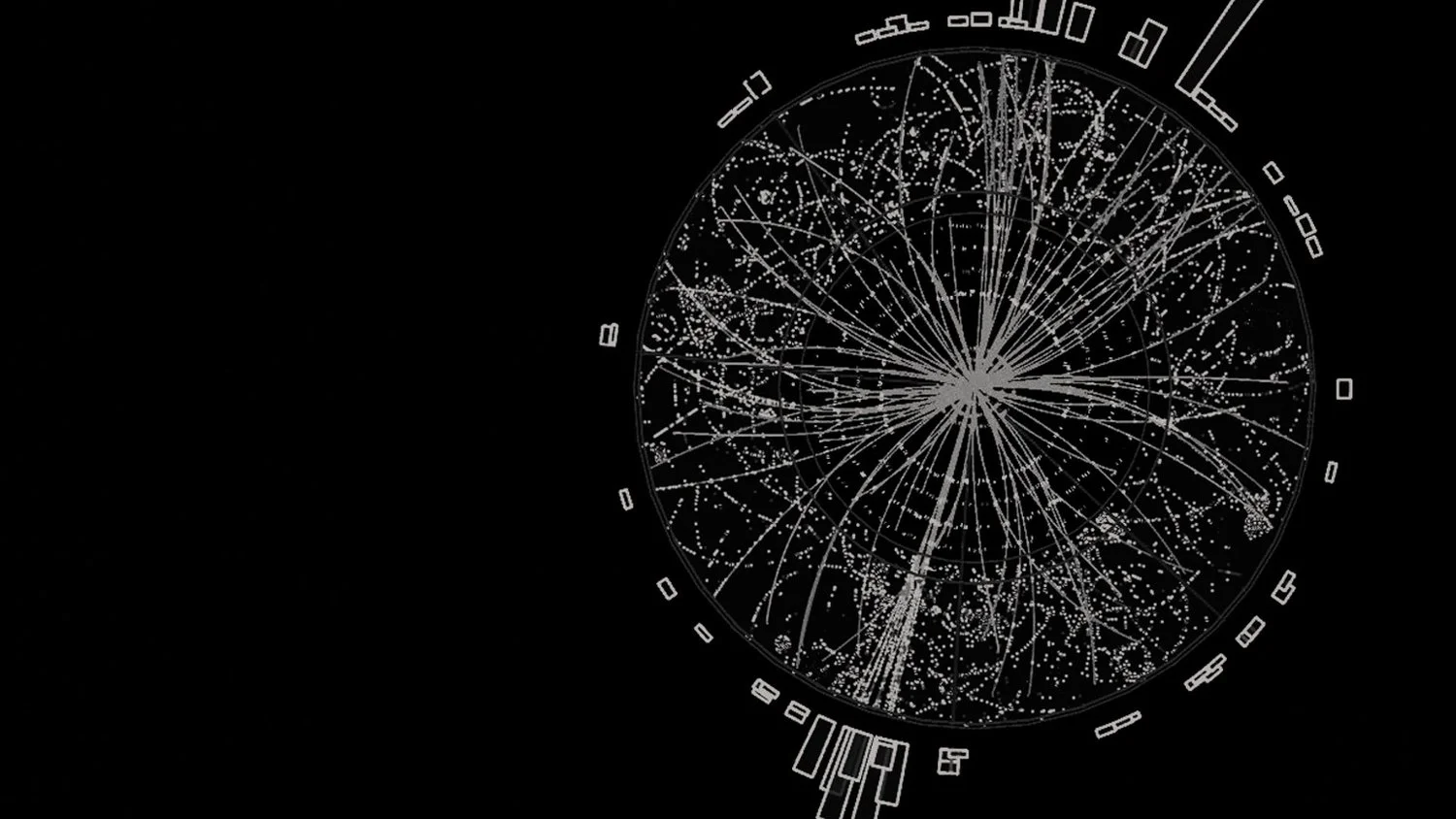
What strange creatures inhabit the so-called “particle zoo”? Why is it a zoo instead of something simpler? Is there anything that connects the forces and particles of our universe? I discuss these questions and more in today’s Ask a Spaceman!
Support the show: http://www.patreon.com/pmsutter
All episodes: http://www.AskASpaceman.com
Follow on Twitter: http://www.twitter.com/PaulMattSutter
Like on Facebook: http://www.facebook.com/PaulMattSutter
Watch on YouTube: http://www.youtube.com/PaulMSutter
Go on an adventure: http://www.AstroTours.co
Keep those questions about space, science, astronomy, astrophysics, physics, and cosmology coming to #AskASpaceman for COMPLETE KNOWLEDGE OF TIME AND SPACE!
Big thanks to my top Patreon supporters this month: Justin G., Matthew K., Kevin O., Justin R., Chris C., Helge B., Tim R., SkyDiving Storm Trooper, Lars H., Khaled T., Raymond S., John F., Anilavadhanula, Mark R., and David B.!
Music by Jason Grady and Nick Bain. Thanks to WCBE Radio for hosting the recording session, Greg Mobius for producing, and Cathy Rinella for editing.
Hosted by Paul M. Sutter, astrophysicist at The Ohio State University, Chief Scientist at COSI Science Center, and the one and only Agent to the Stars (http://www.pmsutter.com).
All Episodes | Support | iTunes | Google Play | YouTube
EPISODE TRANSCRIPTION (AUTO-GENERATED)
We've all heard stories of dystopian worlds, whether in the future or from our own past, like stories of the oppressors and the oppressed, of the haves and the have-nots, of the rulers and the ruled. And we have examples of these stories from medieval Europe, or we have stories of the far future, of, oh, it's going to be a horrible future. We hear a lot of these stories. I'm going to tell you another one of these stories of such a dystopian realm. But this world doesn't take place in the past. It's not from history and it's not in the future. This world is right here. It's all around us. But it's hidden from us. It's buried underneath layers and layers of powerful forces and energies. And only the most powerful experiments reveal the true nature of this reality. In fact, we knew hardly anything about it until about 100 years ago. We finally had the techniques developed where we could probe the subatomic world. Where we could probe the actual atomic world. It was only like 100 years ago or so that we realized that atoms were a thing.
And that there's stuff beneath atoms. Atoms are not the most tiniest, building blockiest things in the universe actually made of stuff. And what goes on beneath the level of atoms is crazy complicated. I mean, I'm not even joking. It is insane how complicated this stuff is, but I want to tell you a little story to get across the essence, the main essence of what's going on down there. We'll start at the top, the royal family, the top dogs, the big cheeses, the most powerful, rich, influential, dominant players of the subatomic world. It's the quarks. The Quarks are like any royal family. They're large. They're extensive. They're constantly infighting. There might be some examples of inbreeding. Like if you've seen like a family tree of royal families, you know what I'm talking about. There's claims to the throne. There's petty intrigue. All sorts of juicy court politics. in the quarks, amongst the quarks. The royal couple, the two at the top, themselves are called up and down. Up and down, the names we give to two of the quarks that sit at the top of the heap.
Between them, between those two, they form the most common, stable agglomerations in the universe, the protons and neutrons. Protons and neutrons are made of quarks of these royal couples, but it's not just two. For some very weird and complicated and deep reasons, this royal couple, they actually form triplets to form protons and neutrons. So they bind together. If you have two ups and a down bagged together, that gives you a proton. If you have two downs and an up, that gives you a neutron. And these quarks, these up and down quarks, rule the protons and neutrons. These are like the impregnable fortresses of the subatomic world. They are long-lived. They are stable. They are difficult to crack apart, protons and neutrons. But they don't get that strong from the qualities of the quarks themselves. They get that through the strong nuclear force themselves. The up and down quarks, these top two of the royal family, they rule by the power of the strong nuclear force. The strong nuclear force is so strong, its binding is so strong that it doesn't only form protons and neutrons, but it forms nuclei themselves, atomic nuclei.
It's able to bind together protons and neutrons. Two protons have the same charge. They would normally hate each other, but the strong force is able to overwhelm that. And It's because of this strong nuclear force that the strong nuclear force binds together the quarks, these ruling couple, the up and down quarks. And it's so strong that it leaks out of that range of the proton neutron is able to bind them together. So you can imagine the protons and neutrons are like the palaces, the fortresses, the keeps, the most powerful, the strongest part of the castle. And if you string a few of these castles together, like a few watchtowers together, you can get a whole castle complex on top of a hill. And that's the atomic nucleus. And like I said, it's only the most violent reactions that can bring down the walls, that can tear down the walls formed by the strong nuclear force that keep the up and down quarks safe in their cozy little palaces. The strong force is over 100 times stronger than any other force in the universe.
Over 100 times stronger. You just can't mess with the strong nuclear force. But it does have a trade-off. Even though that strong nuclear force can build these immense, powerful, strong castles, its range is limited. Inside the nuclear fortress, the strong force dominates all reactions. But outside, if these up-and-down quarks, these king and queens that are ruling the subatomic world, if they want to communicate or influence anything else outside of their fortress... They need to use other forces. The strong force provides not just the glue, the connection between the quarks, but also the mass. The mass of a proton isn't in the mass of the quarks. If you add up the mass of the quarks, you don't get the mass of a proton. You get something much, much smaller. But energy is mass. Mass is energy. We learned this from relativity. And This is how we get the mass of a proton is through the energy of the strong force itself. That's how strong it is. So it's like the castle isn't just the king and queen.
It's not just the up and down quarks. It's the walls and the bricks and the mortar. It's all the stuff. And it's the strong force that's actually putting that up. And so the mass of the castle is much more than the mass of the people that live in it because of the walls itself. Outside this castle, outside this castle is the great teeming masses of the peasants, of the underclass, living in poor little hovel villages clustered around those castle walls. And I'm talking about the Leptons. The leptons are the ones that do the work. If you've ever heard of chemistry, it's because the leptons are doing the thing of chemistry. If one castle, if one nuclei wants to communicate with another castle, it exchanges leptons. It will throw them back and forth, left and right. It will give up leptons, acquire leptons without a second thought. Doesn't care about the welfare, about their needs, their wants, their desires, their hopes, their dreams. They're just there to get the work done while the up and down quarks sit safe inside their castle walls.
The leptons are the ones doing the work. There's three leptons. The electron, the muon, and the tau. The electron I suspect you may be more familiar with. The muon is just like the electron, but bigger. And the tau is just like the electron and the muon, but bigger still. And the reason you don't encounter the muon and the tau all that often, why you tend to find electrons much more often, is that there's a rule in our universe, the rule in our universe, and especially in this realm, is that only the lightest survive. If you get too big, if you get too fat, if you get too wealthy, if you get too rich, you will be cut down. You'll be taken down. You are unstable. In this world, only the poorest survive. Only the smallest and weakest survive. If you're too massive, you are unstable. You will be torn apart into more fundamental particles. So the muon, even though it's exactly like the electron, it's like a peasant that's starting to get a little rich. Maybe they have a few businesses. Maybe they own a ship or something and they become a merchant.
That's not going to be allowed. They're going to be cut down. They're going to be taxed. They're going to be violent mobs. They're going to be unstable and they'll be torn apart into more fundamental particles. The electron is the lightest of the leptons. It's the poorest. It's the weakest. And so that's the one that gets to survive. This rule applies to the quarks too. I mentioned the whole quark family. There's actually six quarks. Six quarks, but only two of them, the up and down, are the ones that we encounter in protons and neutrons. The other ones, top, bottom, strange, and charm, are much more massive, hence they're much more rare. So even though up and down quarks get to rule as the royal couple, Paradoxically, they get to rule because they're the weakest ones, because they're the least massive ones, the least powerful ones, because anything bigger, any other heavier quark, if it forms, will immediately be cut down to size, just the same as it happens with the leptons. So you know what? In the subatomic world, it's the small guys ruling other small guys.
And that's just how it works. So you have a castle. Formed from the strength of the strong nuclear force, inside of it are the ruling family of the up and down quarks. Outside of the castle walls are the electrons, the leptons. So how does – if the strong force can't extend beyond the castle walls – How can the up and down quarks communicate with the leptons, with those electrons working the fields? How can they coordinate them? How can they tax them? How can they communicate with other castles over the horizon, over the hill? They have to use another force. They use the royal messengers. They use the photons. The photons are the carriers of the electromagnetic force. The photons are massless. The photons travel at the speed of light. The photons have infinite range. Of course, the farther you are away from the source, the weaker it will be, the fewer photons will reach you. But in principle, and even in reality, right now there are photons reaching us from the distant edge of the universe.
Photons are born, they travel, they die. They have only one goal, is to carry that electromagnetic force. They are able to communicate outside the castle walls so they can exchange messages between the royal family and the peasants outside. They can communicate from one castle to another, one atom to another, one atomic nuclei to another. They can travel across the universe carrying their very, very important messages. of either repulsion or attraction, doing what photons do. But not all particles can listen to a photon. These royal messengers, as important as they are, not everybody hears the message. If A particle is uncharged. If it doesn't have any electric charge, it is invisible to the royal messengers, to the photons. The photons can only communicate with a particle if that particle has some sort of electric charge. So what is the royal couple to do if they want to rule from their castle? They can't communicate with every particle in the universe outside their castle walls. What are they going to do? Well, they turn to their secret spy network.
They turn to gravity. Gravity is also massless. Gravity also travels at the speed of light. Gravity also has infinite range. And gravity sees everything in the universe. All matter. All energy. Everything. Nothing escapes the ever watchful eye of gravity. But gravity only communicates like a good spy in whispers. By far, gravity is the weakest force, 10 to the 40 times weaker than the strong nuclear force. 10 to the 40 times weaker than the strong force. That is weak. So that's the trade-off. Even though gravity sees everything, charged, uncharged, big, small, nearby, far, gravity sees everything, but its influence is very weak. It's very tiny. The up-and-down quarks in their castle keeps, in their fortresses, they can technically see everything in the universe. They can respond to everything in the universe. but not very strongly, because these spies only whisper. We have our castle keep with the strong nuclear force inhabited by the royal family of the quarks. We have our peasants on the outside, coordinated by the photons.
We have gravity, the extensive spy network, living on the fringes of society. are the ultimate untouchables, where even the peasants will turn their noses down at these unfortunate. These are like the leper colony of the medieval world, of the subatomic medieval world. These are the neutrinos. The neutrinos, once again, have three families. The electron neutrino, the muon neutrino, and the tau neutrino. They are leptons, just like their cousins, the electrons, but much less significant. They don't get to live in the villages. They don't get to cluster around castle walls. They're forced to travel, to roam the countryside. They can't be bound to anything, which can be bad, but also kind of good. Because they don't have any charge, they don't follow orders from the royal messengers, the photons. They ignore the quirks as much as they can. They can even come and go through the castle walls. That's how stealthy they are. That's how, like, they're just simply not noticed. Nobody cares if a neutrino is around.
Oh, did you feel that? What was that? Oh, that was nothing. I don't know. Maybe it was a neutrino. I didn't even see it. Whatever. Let's get back to feasting. Neutrinos are so lowly. that for a long time, we didn't even think they had mass at all. And it's only relatively recently that we discovered that neutrinos do have a little bit of mass. As invisible as they are, they do sometimes cause trouble. They do sometimes act as saboteurs because they can come and go through the castle walls without too much notice because everybody ignores them. Sometimes they do interact with a quark. And when they do, it causes havoc. One of the reasons they are so slippery is they don't even have fixed identities. They can wear masks. You never quite know what kind of neutrino you're looking at. You can look once and you say, that's an electron neutrino. You finally notice it. You finally pay attention to it and it's an electron neutrino. You look again and it's a tau neutrino. Travels a little bit across the room.
Now it's a muon neutrino. The neutrinos are strange beasts indeed. They can transform their identities. They can cycle through these three identities as they travel, as they propagate. That's how slippery they really are. There's this rigid hierarchy in the subatomic world. We have the collections of protons and neutrons, which we call atomic nuclei. The protons and neutrons are incredibly stable when they're bound to those nuclei in their fortresses with the electrons in the villages outside. Occasionally, order does break down. In this rigid, stratified, oppressive society, a neutron can defect. A clump of quarks that we call a neutron can escape the castle walls. Roam out into the countryside. Sometimes an electron can make it through the front gates and start roaming around the castle and eating all the food supplies and putting on gowns and suits. I don't know what you do inside of a castle. And sometimes a neutrino can completely slip through the defenses unnoticed. Who's there to do the dirty work? Who's there to clean up the messes? Well, the royal messengers, the photons, certainly aren't going to do it.
They're much too proud for that. They've got a job to do. The strong force is there, but it's too busy keeping the castle walls glued together. And besides, it has limited range. Gravity, gravity is all pervasive, but it's too weak to really do anything. There is one more force. to handle the rogue particles, say neutron defects from the castle, to deal with the occasional neutrino or electron incursion. And those are the Patreons. That's right, the loyal Patreons keep order in line and keep society functioning. Go to patreon.com slash pmsutter to learn how you can support this podcast and all my education and outreach activities. I really do sincerely appreciate all the support all of you have given me. over the years, and that's patreon.com slash pmsutter. Anyway, who does the dirty work that nobody else is willing to do? It's the special forces. The W and Z bosons. That's how special they are. They don't even have cool names, like photons or gluons. They're just W and Z, the carriers of the weak nuclear force.
The bosons, these W and Z bosons, the special forces are capable. They have a very, very special power that nobody else has. They're capable of transforming one kind of quark into another. They see an up quark, they can turn it into a down quark and vice versa. What does this mean? This means that they can transform protons into neutrons and neutrons into protons. This means that if an electron enters the atomic nucleus, enters the castle walls, or a neutrino does, they can use that to their advantage. They can use that to flip a neutron to a proton, a proton to a neutron. They're the only force capable. Of that very special exchange. Think about that. The weak nuclear force, probably the worst named force where it's just not getting a lot of it's not getting a lot of justice. It should be called the special nuclear force. I'm going to start. We should start right now just calling it the special nuclear force because it's how cool it is. What other force can communicate with quarks and communicate with leptons? Who? Nobody.
Well, I know the electromagnetic force can do it if they're charged, but who else gets to talk to neutrinos? Who can talk to a top quark one day, an electron another day, and a neutrino another day? It's the weak nuclear force. That's how cool it is. But that's why they really are the special forces. They do the dirty work that nobody else is willing to do. There is, in this world, a resistance. The anti-particles. All particles, the leptons, the quarks, everybody, have a mirror version of themselves where everything is the same, but the charge is reversed. Charge here doesn't always mean what you think it does. It can mean electric charge. I'm going to give you another example of a different kind of charge later on in the show. But you just take like all the mass is the same. The spin is the same. Everything is the same. But you flip the charges and you get an antiparticle. Matter and antimatter used to be in parity in the very early universe. There were equal amounts of matter and antimatter.
But something happened we don't fully understand. Feel free to ask. In the early universe to tip the scales to give the universe more matter than antimatter. Nowadays, antimatter is only occasionally formed here and there. From high energy reactions, whether in our laboratories or in energetic events in the universe, occasionally you will get antimatter formed. And when that happens, they are incredibly destabilizing, incredibly destructive. The last thing this structured, ordered society wants... is an antimatter particle floating around. Because as soon as an antimatter particle meets a normal matter particle, boom, a tremendous amount of energy is released. And you don't want that. You don't want energy released near your castle walls or in your peasants. As much as you hate the peasants, they still need to do the work of farming the fields and communicating with other atomic nuclei. So you got to keep them around. Would hate for them to go. You certainly can't have your castle walls destroyed because then that means you disassociate as an atom and anti-particles have the energy to do it.
So it's a good thing for these up and down quarks. ruling from their palaces and castles and their strongholds and their keeps and their fortresses, that there isn't a lot of antimatter around. There's one last aspect to this subatomic world. The shadow government. See, the up and down quarks... Think they're in charge, sitting inside of their protons and neutrons with their strong nuclear force, almost entirely resistant to any other force, to any other energy. But you know who's really calling the shots back there? The Higgs. The Higgs is the real power behind the throne. The Higgs is what gives both the leptons and the quarks, both the electrons, top, down, up, bottom, strange, charm, tau, muon, all of them. It's what gives them all their mass. The interaction of an electron with the Higgs field is its mass. The interaction of an up quark with the Higgs field is its mass. Without the Higgs, this whole society would break down. Nothing would make sense. The particles would not have their distinct abilities anymore.
and identities without the Higgs being present. And simultaneously, the Higgs allows for the splitting of the forces. If without the Higgs, we wouldn't have a separation between the electromagnetic and weak nuclear forces. We wouldn't have a separation between photons, the royal messengers, and the special forces, the WNC bosons. They would all be the same and it would be its own thing. And we wouldn't have the rich chemistry and interactions that we know in our real universe without the Higgs. So yeah, it may look like the up and down quarks are the rulers of the thrones, but there's someone right behind them whispering in their ear telling them what they need to do. This story... of the up and down quarks, the other quarks that really don't get to participate in normal everyday reactions, the electrons, the taus, the neutrinos are organized by what we call the standard model of particle physics. It's not really a theory per se, but like a framework of related theories. where the machinery for understanding all this comes from quantum mechanics and comes from special relativity.
You marry those together, you get theories called quantum electrodynamics, quantum chromodynamics, and this is how we understand the electromagnetic force, the weak nuclear force, and the strong nuclear force. There are many things, as it is a huge accomplishment of 20th century physics to work out what is going on at these incredibly tiny scales. But As much of a success as it is in something worth celebrating, something where researchers have received multiple Nobel Prizes for over the decades, there are things that the Standard Model does not explain. Things like neutrino mass. Things like gravity. Things like the nature of dark matter and dark energy. There are known physics that we have yet to incorporate into the Standard Model. What will it look like in the future? How can we extend the Standard Model or possibly replace the Standard Model with a whole new picture? We have no idea yet. That's a separate show. Besides the physics that we know that exists but we haven't incorporated into the Standard Model, like gravity, like neutrino mass, like dark matter, there are some other kind of overarching mysteries about the Standard Model.
Like, why are there three generations of matter? Why are there always three sets of particles? Why do we always get triplets of particles that have the same properties but different masses? Like the electron, the muon, the tau. Like the electron neutrino, muon neutrino, and tau neutrino. Even the quarks themselves, there's six quarks, but they're split into two families, subfamilies, groups, dynasties, whatever. Up, charm, and top all have the same charge, same properties, but different masses. And then down, strange, and bottom all have the same charge, but different masses. Why? Why? Who picked that? Why do we get that one? Why is that our universe instead of something else? We don't know. Why do we have four forces of nature instead of more? Why is there this huge discrepancy where the strong nuclear force is over 100 times stronger than anything else and where gravity is 10 to the 40 times weaker than anything else? Why? We don't know. There are a lot of mysteries in this universe.
The Standard Model is a huge success, painted this wonderful picture of our universe, but we don't fully understand it. And we don't fully understand what else is going on. There's one other thing I want to mention in this show before I go. And I couldn't figure out how to shoehorn it into the little mini narrative, the little picture of the medieval oppressive society that's happening at the subatomic world. And so here it is just kind of awkwardly tacked on to the end. And that's something called color charge. I did mention earlier that in anti-particles, when you take a particle and you keep everything the same, but you flip the charge. And it's not always just electric charge. There's something else called color charge that particles can have. And it's a horrible name, but we're going to go with it. Just like the electromagnetic force talks to particles via its charge, the amount of charge on a particle tells you how much it will respond to the electromagnetic force. Well, through experiments, we found out that there's something else that gives particles the ability to respond to the strong nuclear force.
And we decided to name a color because you need three of them to make a whole set, like primary colors, like red, green, blue, you need to mix together to make white. Well, you need three quarks to mix together to make a proton or a neutron. But there's complications. There's complications because you can also put a quark up with an anti-quark and they cancel each other out to give white. And you can solve a bound particle because a strong nuclear force is really complicated like that. Really, the strong nuclear force should be called the color force. It's what binds quarks together to form protons and neutrons and other groups of particles. It's so strong it spills out to bind them together to make atomic nuclei. The color force, not the strong nuclear force. I just wanted to mention that it really, really the strong nuclear force deserves its whole episode. But I wanted to just paint that little mini picture so you have some idea of what's going on. If you want to talk about color force, color charge, strong nuclear force, feel free to ask.
I'd be happy to do a whole entire episode on it. I just wanted to put that in so you have a complete picture of what's going on in the Standard Model. As depressing, as horrible, as dismal as that world is, that's the world we live in, subatomically speaking. I'd like to thank my top Patreon contributors this month, Justin G., Matthew K., Kevin O., Justin R., Chris C., and Helga B. Go to patreon.com slash pmsutter to learn more. Also, Astro Tours are a go. You need to go to astrotours.co. That's astrotours.co for more information. We have tickets available for the cruise, the Caribbean cruise with Fraser Cain and and the Atacama Dark Sky Expedition in December of 2018. Go there right now and make a reservation and then decide later where all the money is going to come from. It's going to be an amazing trip. I'm excited for both trips. They're going to be fabulous experiences. And I'd really love to share it with you. And space radio is also a thing. Go to spaceradioshow.com. We have tons of fun every week.
You need to try out that show if you haven't already. And of course, thank you to the listeners who asked the questions for this episode. We've got Alessandro M via email asking for an overview of particle theory in the Standard Model. Roger on the website asking about particle letter soup. Martin N on Facebook, what's beyond the Standard Model of particle physics. At Dan Chin on Twitter, please go into more detail on the forces. What are they? And at Pozoker on Twitter, can you please do an episode on the strong and weak nuclear forces and how they can help me be a better person? I missed that part. I missed that part about being a better person. You're just going to have to figure that out on your own. You can ask questions by going on Twitter and Facebook using the hashtag AskASpaceman. Also go to the website, AskASpaceman.com. You can also follow me directly on Twitter. My name is at Paul Matt Sutter. That's also good on Facebook too. You can go to YouTube. Go to YouTube.com slash PaulMSutter for...
All sorts of cool videos. Super fun. Doing lots of collaborations recently. Lots of cool stuff. If you can't donate, then I beg you to go to iTunes where you can give the show a nice little rating and tell other people about it. See you next time for more complete knowledge of time and space.

How does degeneracy pressure work? What kinds of particles exist below the level of neutrons? Can they hold up a star against gravity? I discuss these questions and more in today’s Ask a Spaceman!
Support the show: http://www.patreon.com/pmsutter
All episodes: http://www.AskASpaceman.com
Follow on Twitter: http://www.twitter.com/PaulMattSutter
Like on Facebook: http://www.facebook.com/PaulMattSutter
Watch on YouTube: http://www.youtube.com/PaulMSutter
Go on an adventure: http://www.AstroTouring.co/
Keep those questions about space, science, astronomy, astrophysics, physics, and cosmology coming to #AskASpaceman for COMPLETE KNOWLEDGE OF TIME AND SPACE!
Big thanks to my top Patreon supporters this month: Justin G., Matthew K., Kevin O., Justin R., Chris C., Helge B., Tim R., SkyDiving Storm Trooper, Lars H., Khaled T., Raymond S., John F., Anilavadhanula, Mark R., and David B.!
Music by Jason Grady and Nick Bain. Thanks to WCBE Radio for hosting the recording session, Greg Mobius for producing, and Cathy Rinella for editing.
Hosted by Paul M. Sutter, astrophysicist at The Ohio State University, Chief Scientist at COSI Science Center, and the one and only Agent to the Stars (http://www.pmsutter.com).
All Episodes | Support | iTunes | Google Play | YouTube
EPISODE TRANSCRIPTION (AUTO-GENERATED)
I want you to know that I do have standards when it comes to this show. Don't get me wrong. It is very, very minimal standards. And it's basically, I have a set of notes. So, yeah. I was developing another show. I had planned this episode to be totally devoted to the idea of quantum entanglement. And it was going to be awesome because it's a really, really cool concept with lots of intricate physics. But as I was prepping it, as I was reading, as I was taking my notes, it just... I wasn't liking the metaphors. I wasn't like the direction I was going in. I couldn't come up with any good jokes, even bad ones, especially bad ones. And I decided to pause it. And I decided to put it off. Maybe next month, maybe six months, maybe like 10 years from now. I don't know when I'm going to get back to it, when I'm going to feel happy with the subject of quantum entanglement. So I thought, instead, I'd just do something fun and lighthearted and easy, like, I don't know, QuarkStars. And I guess when it comes to the world of Ask a Spaceman, QuarkStars qualify as fun and lighthearted entertainment.
Well, it turns out as I was digging into the world of quark stars and figuring out and I really want to explain it to you. You know, the cool physics is happening with quark stars. Halfway through that topic, I found myself talking about entanglement. And here we are. I need to mention Entanglement in order to get across what I need to talk about with QuarkStars, whatever the heck those are. But I don't want to actually dig into the topic of Entanglement because I got entangled in it in a very bad way. And I want something better for all of us. So what I'm going to do, and that's the reason I'm kind of prefacing this episode with this discussion, is I'm going to allude... I'm going to wink and nod to entanglement where it figures in, but I'm not going to go into detail. I'm going to save that. So just put a placeholder. Say when I, when I say the word entanglement, I want you to ring a little mental bell and say, okay, I may not fully understand how that works. We're going to get there later.
I would have preferred it the other way around, but this is life. And I don't want to go into detail because who would want to spoil an entire episode on Entanglement? I've got to have some reason to bring you guys back every other week. I need some sort of hook where you'll just think you're done. We're never done with complete knowledge of time and space, but I have to convince you every single time. I need to talk about entanglement because I need to talk about degeneracy pressure. I've mentioned and I've spoken about degeneracy pressure before. We've met it. We've met it in white dwarves. We've met it in magnetars and neutron stars. We met it recently in metallic hydrogen. And while I've talked about it at a very surface level, we never got into the real nitty gritty dirt under your fingernails, hearty meal satisfaction detail that I think you deserve. So I'm going to start there with degeneracy pressure. Entanglement works in in a very cool way. And then we'll go on to quark stars.
So to get this story started, before we build up to quirk stars, whatever the heck a quirk is, I want you to think of two particles. Completely, 100% identical twins. You cannot tell them apart. They look the same. They talk the same. They smell the same. They act the same. They are identical. You can't tell. To help yourself out... To keep them distinguished, these two identical twins, you're going to give them labels, just little name tags. Nothing associated with the property of the particle itself, because there's twins, you can't tell them apart, but just totally random and artificial name tags that you're going to stick on them. Say one you're going to call Adrian, and the other you're going to call Enrico. Just two names out of a hat. Now, these two particles, because they're identical, they're a little bit mischievous. They like to play games. Sometimes when you're not looking, they'll swap name tags. And this frustrates you to no end because you would like to keep track of which one is Adrian and which one is Enrico.
And every time you turn around, they get together and they swap name tags. And then you're not exactly 100% sure if you're looking at Adrian or you're looking at Enrico. So to mitigate this, to try to stop them, you're going to keep them separate. You're going to keep them in separate rooms. If they're in the same room, they're going to be on opposite side of the dinner table. They're not going to get close to each other. And as long as you can keep them apart, you can keep track of each individual particle. As it moves around, they might have their own trajectories and positions and velocities, whatever particles do when they're up to no good. You're going to keep track of them. And as long as they're separated, you are confident that Adrian is Adrian and Enrico is Enrico. But if that situation happens, let's say, you know, you get a little lazy, something comes up at work, you're home late, whatever. And you've come home to find Enrico and Adrian very close to each other in the same room.
How do you know that? They've switched labels or not. How do you know which particle you're looking at? This situation, the definition of close might mean they're entangled. That if they're in an entangled state, they have an opportunity to switch labels. And you're not exactly sure which label goes on which particle. That happens in the entangled state. So how do you know you don't? They're identical. That's like the definition of identical. You can't tell them apart without these artificial labels. So that's the definition of identical. And when they're close, not only are they identical, they're indistinguishable. That's a very, very subtle thing, the difference between identical and indistinguishable, but we need to make that distinction. When they're far apart, they're identical, but you can tell which is which because you know there's no chance that they've swapped labels. Once they have the opportunity to swap labels, they become indistinguishable. You really don't know. Which one is Adrian? Which one is Enrico? Let's say these particles are like electrons or protons, even atoms.
Particles, tiny little particles, are ruled by quantum mechanics. And in quantum mechanics, we need to summarize every property of a particle so that we can keep track of how it might evolve when it's moving around or interacting or doing physics stuff. The summary, the list of everything associated with a particle, The label you might give it isn't necessarily a name, but it's called a state. When I say the state of a particle, I mean a list of its mass, its charge, its spin, its energy level. Everything that I can associate with that particle goes in a big list, and I call that list a state. When there are two identical particles next to each other in a tiny box, we have a little bit of a mathematical conundrum. When they are close to each other, when they are indistinguishable, when they can swap labels at any time, they are in an entangled state. And in quantum mechanics, it's not just good enough to describe each individual particle separately because they're entangled, because they're a little bit mixed together because I don't know which one I'm talking to at any given moment.
I need to create, I need to write a state. I really need to write a mathematical description of the combined states of the two particles. Come on. So one mathematical description that describes both particles simultaneously in the box. If I want to do any kind of physics and quantum mechanics, that's what I have to do. Now, it turns out that that mathematical description that we use to describe those combined particles can only take one of two possible forms. There's only two ways we can write down a mathematical description in quantum mechanics to describe these two indistinguishable particles. In one form of the equations, one way of writing the equations down of this combined indistinguishable state, when the two particles swap places, nothing changes. In the other form, the way the mathematics are written, the actual equations that we would write down, when the two particles swap places, a minus sign pops out in front. In the first case where you swap particle positions, when they swap labels or swap positions and nothing changes, that's called symmetric.
And if they swap places and in the mathematics and a minus sign pops up, it's called anti-symmetric. Just to be clear, that minus sign that pops up in the mathematics, it's not like a minus sign appears in space or the particles have negative charge or negative mass or negative anything. It's a minus sign in the mathematics and the mathematics only. It appears in the math. It doesn't appear like to your eyeballs. And I hope that makes sense. What I'm trying to get across is we need to separate the physics of what's happening, the physical reality of these two particles being close to each other, with our mathematical description of it. And in the mathematical description of two particles to a set of twins in a box where we can't tell them apart, if they swap positions... If Adrian is on the left and Enrico is on the right, and then I turn around and Enrico is on the left and Adrian is on the right, if the math that I use to describe their state doesn't change, then they're symmetric. And if it does change, if a little minus sign pops out, it's anti-symmetric.
Now, it turns out that particles in the universe must either be of the first kind, symmetric, or the second kind, anti-symmetric. If they're the first kind, if they're a certain kind of particle and they just happen to be symmetric, when they swap places, nothing changes. And if it happens to be an anti-symmetric kind of particle, when they swap places, the mathematics gets an extra minus sign. What does this have to do with anything? Don't worry, we're almost there. You remember particle spin? If not, check out the old episode. It's a great one. It's a fundamental property of particles. Like if you have a particle, it has mass, it has charge. It also has this property that we'll just call spin, even though that's kind of a horrible name. Different particles have different masses, they have different charges, and they have different spins. Some particles have spin that we call half or three halves or five halves. Other kinds of particles have spins of zero or one or two. You can either have a spin of a half or one or one half or two, you know, on and on and on.
It turns out that if you happen to be spin zero or spin one or spin two, then you are a symmetric particle. That means if you swap places with one of your friends, nothing changes in the mathematics. And it turns out if you're spin half or three halves or five halves, you're the second kind. You're anti-symmetric. That means if you swap places with one of your friends, a little minus sign pops out in the mathematics. Where'd that come from? Who asked for that? It is just how the universe kind of works. We give a name. to particles that are symmetric, that are spin 0, 1, 2, or 3. We call these bosons. And the half-spin, the half, three-halves, five-half-halves that are antispectric, we call them fermions. So here we go. This is the big bow to put on this particle present. If Adrian and Enrico, you've put these little labels on these two particles, And you want to know, like, hey, I wonder if they're symmetric or antisymmetric. I wonder if they're fermions or they're bosons. Well, you put their little label on and you let them swap places.
If nothing changes, then they must be bosons. They must be spin one or spin two or spin zero. And if a minus sign pops up in the mathematics, they must be fermions. They must have spin half, three halves, five halves. Okay, so what? Well, here's the juicy bit. The juicy bit is you need to go to patreon.com slash pmsutter to learn how you can support this show. Your contributions, your monthly contributions, whether it's a dollar or five dollars, any amount of dollars, even fractions of a dollar, half dollar or whole dollar, it doesn't matter. Fermion dollar, boson dollar, it doesn't matter. You can keep this show going. I greatly appreciate it. It's your contributions that keep this show alive. Go to patreon.com slash pmsutter. Now here's the real juicy bit. Let's say, let's say, go ahead and say Adrian and Enrico are fermions. They're half spin. They're antisymmetric. They're fermions. And they have the exact same state. They really are identical and indistinguishable. They have the same charge.
They have the same spin. They have the same mass. They have the same energy value. Everything about these two particles is identical. Adrian and Enrico. And they're fermions. If they swap places... If I put them in a little box and they flip around, by the quantum rules of fermions, a little minus sign pops out in the mathematics that describes their combined state. But for us, just looking at it with our eyeballs... The two situations must be identical because the particles are twins. Enrico on the left and Adrian on the right looks exactly the same as Adrian on the left and Enrico on the right. Because that's by definition. They're identical. There's absolutely no way I can tell one particle from the other. Nothing at all distinguishes them. So by just looking at it, if I flip them around, that situation looks exactly the same. But... In the mathematics, it's not the same. A little minus sign pops out. Something is wrong. Something doesn't add up. How can a state or a combination of states, a mathematical description, be a negative of itself? In one view...
The particles flipped around look exactly the same. I don't know which one's Adrian, which one's Rico. But the mathematics says, no, it's totally different. There's a minus sign. Like the mathematical description is off. The only number that is equal to its own negative is zero. The only way to resolve this situation where from one point of view, the particles are absolutely identical, have the exact same state. But from the mathematical point of view, no, there's something different happens when they swap places. Is that this situation can't happen. that Adrian and Enrico can't. It's impossible for them to have the same state. If these particles are fermions, if they have spin half, then there are rules that apply to them. This particular rule is called the Pauli Exclusion Principle, named after the guy who figured it out, Wolfgang Pauli. Two fermions cannot occupy the exact same state because the mathematics won't allow it. The rules of the universe... cast down upon us have said, hey, if you have spin half or three halves or five halves, you are not allowed to have the exact same state, the same charge, the same mass, the same energy level, everything the same as any of your friends.
Just not allowed. something about Adrian and Rico have to be different. They're not allowed to be indistinguishable. They're not allowed to be identical. They're not allowed to have the exact same state. They're just not allowed because a little minus sign. You don't always blame a minus sign. A minus sign pops up in the mathematics. They are not allowed to have the same state. Something has to be different. Maybe one is spin up and the other is spin down. Maybe they have to sit at different energy levels. It doesn't matter what's different about them. Something's got to give. Something has to be different. They cannot be the same. They cannot have the exact same state. To get to this point where no two fermions can share the same state. I said a lot. It turns out. It turns out this. It turns out that. It just so happens that this is the way the universe works. When we were first uncovering quantum mechanics in the early 20th century, these rules just appeared to be basic facts about the way the universe works.
We discovered them through experimentation, but they were just kind of shoehorned into quantum mechanics. Like, hey, we'll just make a list of everything that nature is telling us. We have no idea what's going on. But hey, we're going to call these kind of particles fermions. They can't share the same state. They're antisymmetric, et cetera, et cetera. We're just going to write it down. Back in the day, you could win a Nobel Prize for just doing that. Those, man, those were the good old days where you could just list things that you don't understand and not only write a paper, you could get the highest honor in physics. But, you know, that ship has sailed. You got to do harder stuff nowadays. The cool thing is that we do have a source for understanding where these fundamental rules come from. They don't just pop out out of nowhere. It's when you combine special relativity with quantum mechanics, you can develop some theorems. That's right, theorems, not theories. These are theorems. These are mathematical proofs.
that connect the spin of a particle to the properties of its symmetry, whether it's symmetric or anti-symmetric, whether it gets to share the same state with one of its friends or whether it doesn't. That comes from a very cool connection, very deep, a very mathematical connection happening. It's a rule of special relativity. It turns out it has something to do with special relativity applied to the case of quantum mechanical systems give you these things. That's kind of hard to talk about, so I'm just going to stick with it there. If you'd like to learn more about that very deep and fundamental connection, feel free to ask. So what does this give us? We have fermions like electrons, protons, neutrons, and quarks that can't occupy the same state. What? Who cares? Who cares? Well, atoms care. This is how you can get electrons in different energy levels orbiting a nucleus, surrounding a nucleus, I should say, which gives you, I don't know, all of chemistry. It's due to these rules, due to these symmetric rules, the exclusion principle.
This gives you, let's say, the behavior of metals. Kind of important. Gives you metallic hydrogen, which we talked about. And it gives you degenerate stars. Degenerate stars are stars, dead stars, that are held up by the rules of quantum mechanics itself. Most stars are not supported by degeneracy pressure. They're supported by just normal pressure. They're just super hot. They're a gas. And gravity wants to squeeze it in, but because it's so hot, the gas says, no, I resist you. I'm going to try to blow up in those two forces, the explosive outward expansion and the contraction of gravity, balance each other out, and boom, you get a star. If you take a gas of fermion, say you take a whole bunch of electrons. And cool it down. Get rid of its temperature. Ice it down. What if you brought it all the way down to absolute zero? Which you can't, but let's play pretend. You would expect, you would expect, if you took this cloud of electrons and cooled it down to absolute zero, it would scrunch way tight together.
But... You will be surprised. There is still a source of pressure because not all electrons can cram into the zero temperature, zero energy state. Only one electron will reach the zero temperature, zero energy state. And once it's there, it's like, hey, guys, I'm full. I already took it. It's mine. I'm in the ground state. I'm in the low energy state at zero degrees temperature. And none of you can come in. All other electrons, because they can't share that state, they're not allowed in. There's only one of them. They have to go into higher energy levels. So they will still have energy. A gas of fermions at absolute zero will still have energy because of this exclusion principle. And that energy translates into a degeneracy pressure. You can cool this ball of electrons, this ball of fermions down to absolute zero, and you can try squeezing on them and they'll resist because they've got nowhere to go. They're like, no, I can't go down to the ground and say, I don't care how hard you're pushing me, man.
I cannot go down there. It's already full. Can't you see? I'm going to have a certain amount of energy. like I mentioned in the episode with metallic hydrogen, there's another way to understand this or another, another way to approach this, I should say. And that's through the Heisenberg uncertainty principle where you cannot measure the position and the velocity of a particle with equal precision. You have to give up something. You can imagine, you can look at it through this lens, where you're trying to squeeze down electrons into a very, very, very, very, very tiny state. You know, small, compact volume. Say, no, I want you to go in this tiny little box, little electron. But the more you pin down its position, the more you know about its position, it means the less you know about its momentum, the less you know about its speed. So if you try to cram down an electron into a very tiny box, it's going to vibrate like crazy. It's going to have really, really high ridiculous velocity due to the fact that you're trying to cram down its position.
So it's going to bounce around a lot. It's going to fight you. It's going to be a pressure. It's going to be hard to do. When electrons support a star against collapse, we call it a white dwarf. And that's about the mass of the sun compressed into, say, the size of the Earth. This degeneracy pressure of a white dwarf was first worked out. It was discovered by supermanian Chandrasekhar, who is an awesome guy in physics and astronomy history. An amazing story. I'd love to tell this story sometime. Just ask. And if you can't write it down, just say, hey, that Indian physicist that figured out white dwarfs, happy to go into it. Chandrasekhar figured out how a star could support itself with degeneracy pressure, basically discovered white dwarfs before we knew what a white dwarf was, but figured out that there is a limit when it comes to electrons. Degeneracy pressure is super strong, but it can be overwhelmed. You can force the electrons into a different state. Chandrasekhar didn't really know what would happen if you took a white dwarf and overwhelmed it.
If it has a mass greater than 40% more than the mass of the sun, gravity will be too strong. It will overwhelm the degeneracy pressure. He wasn't exactly sure what would happen. We do know what happens now. When you take something like a white dwarf and squeeze on it so much that the degeneracy pressure of electrons overwhelm it. What we realize can happen is that you can take a proton, shove an electron inside of it, and turn it into a neutron. And so if you have a star made of a mixture, a nice healthy mixture, protons, neutrons, and electrons, if the gravity gets too strong, then the electrons, they're still fighting with degeneracy pressure. But due to the increased gravity, they'll find themselves being shoved into protons instead, turning them into neutrons. And you basically can convert an entire star into a giant ball of neutrons, just neutrons. Once you have that, the neutrons can support themselves again against further collapse by degeneracy pressure because neutrons are fermions.
They're in the same camp. They have the exact same quantum rules applied to them. So you can overwhelm electron degeneracy pressure and boom, get a neutron star. The neutrons are much more massive than the electrons, so they can be squeezed even tighter together. That's why you get these amazing creatures called neutron stars and magnetars, where you take two or three suns worth of material and cram it down into the size of a city or a neighborhood. That's how impressive these things are. But neutron stars, neutron degeneracy pressure, it can be overwhelming too. We're not exactly sure how massive a neutron star can get before the degeneracy pressure is overwhelmed in that case. Somewhere around two or three times the mass of the sun. It's much harder to figure out. Much, much, much, much harder to figure out because nuclear physics is kind of hard. And also gravity is strong enough inside of a neutron star that we need to understand general relativity. Basically, we don't fully understand what's going on inside neutron stars.
It's just super hard. And unless we crack one open, it's going to be kind of hard to figure it out observationally. We can only see them from the outside. We don't have any here on Earth. Kind of a sticky problem. So it's a good question to ask. Okay, if I overwhelm electron degeneracy pressure, I get a neutron star. What happens when I overwhelm neutron degeneracy pressure? Right now, we don't think there's any lower level. There's no other sources of pressure support. There's no other crazy exotic physics. Gravity just crushes everything to infinity and we get a black hole. Of course, like I talked about at length when it came to black holes, we know that the singularity doesn't exist, but we do know that black holes, the astrophysical objects exist. Black holes are there. We know that something happens in the singularity to prevent the formation of an infinite point of density because that's not a thing. But is there anything in between? Is there anything in between a neutron star and a black hole? Well, if you crack open an atom under high pressure, you get a bunch of electrons, you get a white dwarf.
Crack open that, you get, you know, push it down even further, you get converted into a neutron star. If you crack open neutrons under high pressure, you get a bunch of quarks. Yeah, quarks. Welcome back to the wonderful world of particle physics jargon, which I'm sure you've missed here on Ask a Spaceman. But you keep asking questions, and we need to dip our toes in the particle physics world with all its wonderful and Byzantine and horrible, I lied about the wonderful part, jargon that comes with particle physics. So it's really your fault that I'm here, and I'm totally blaming you. Very super quick version is electrons are just electrons. Protons and neutrons, however, are actually bags of smaller particles that we call quarks. Each proton and neutron is made up of three quarks all glued together with the strong force. There are six kinds of quarks called up, down, top, bottom, strange, and charm. If you have up, up, down mixed together, you get a proton. If you have down, down, up, you get a neutron.
You get various other combinations. You get various other kinds of heavy particles. One of the things that makes studying these so difficult is that quarks have an interesting property to be explored if you so desire. That they are confined to form groups like protons and neutrons. They can't exist on their own. You'll never see just one quark by itself. It will only ever be bound together with other quarks to make heavier particles. So no matter how much they'd like to be free and isolated, they'd always be forced to be in pairs or triplets or higher groups. So to get to the question, do quark stars exist? Is it possible to make a quark star, something between a neutron star and a black hole, that's supported by quark degeneracy pressure? Well, in order to figure out, we need to play some games of physics. In the game of physics, We follow the mathematics to make predictions and figure out what the observable consequences might be. We go hunting in the universe to look for a particular signature for evidence of a particular mathematical theory.
Or you can play it in reverse. You can find stuff in the universe that we can't explain and you can cook up an explanation for it. So let's follow game number one. What do we predict? If we're going to pretend that quark stars exist, what might they look like? Well, it's kind of hard to say. Neutron stars are hard to understand, but at least they're neutrons. I mean, come on, everybody has a neutron. Quarks are a whole new level of difficulty. We can't study individual ones in the lab, which sucks. And the math is super hard, which really sucks. We do know that to pop out some quarks out of a neutron, it requires incredible pressures and temperatures. And that if you tried to make a star out of, say, a mixture of the normal, familiar up-and-down quarks, like the ones a neutron is made out of, it would be very unstable. If it was exposed to space, it would just boil away, basically. But there are some possible pathways that if you're trying to scrunch down a neutron star, and it starts popping out quarks all over the place, and they start combining together in interesting combinations, that some of them might be converted into strange quarks, this...
one branch of the quark family tree and they might be a little bit more well-behaved like you can maybe kind of sort of construct a large object like a star and expose it to the vacuum of space and it might survive if it is possible if nature is even capable of manufacturing quark stars it must be very rare because there's only a thin window between a neutron star in an all-out black hole all-out gravitational collapse catastrophe. There's a transition from white dwarfs to neutron stars. And right now we think there's just the smooth transition. Like if you're too strong for a neutron star, boom, you're going to make black holes. We know neutron stars exist and we know black holes, the astrophysical objects exist. There's like not a lot of wiggle room to make a quark star. Well, what about a different approach? Maybe you could stuff a quark star core inside of a neutron star shell like an M&M. Except it's a Q&N. And it might be okay. It might live. Perhaps. Maybe all neutron stars really have quark cores.
And that is so hard to say. due to the extreme conditions in the cores. Well, then that's fine. We just need to rename it. That's just a renaming exercise. Instead of neutron stars, they're really quark neutron stars, and just call it a day. That's a big fat maybe, that maybe neutron stars, the cores, are so exotic that they really have quark cores. Say that 10 times fast, I dare you. That's super hypothetical, though, because like I've mentioned, we don't fully understand the material properties of quarks. We don't understand the strong nuclear force very, very well. It's hideously complex. We don't understand the interiors of neutron stars. Full stop. We don't know what's going on on the inside. So maybe they have quark cores. Maybe they don't. Either way, if they exist, whether quark stars exist inside of neutron stars or as their own independent object, it's very hard to tell a quark star from a neutron star. From the outside, they're both dense. They're both small. They're both super hot.
It's hard to tell if you just look at a neutron star or something weirder. So what about game number two? Is there anything out there in the universe that we can't explain that's just begging for an explanation? And wouldn't you know it, quark stars are just going to fit the bill. Well, there is a gap, right? There is a gap between the maximum neutron star mass, about two-ish times the mass of the sun, and the smallest black hole that we've ever seen, about three, a little over three times the mass of the sun. Maybe there's a nice snug little fit for quark stars right there. A little bit, I'll put it right there. A little bit, no one will even notice. Maybe. But it could be an observational bias, like it's easier to find big black holes. Maybe there are two, two and a half solar mass black holes floating around out there. They're just hard to spot. Possibly sometimes we see some explosions that look like supernova or regular nova, but seem a little off kilter. You know, the elements seem wrong.
The maximum brightness is a little bit off. The time it takes to cool down is a little bit off. Maybe it's what's called a quark nova. Yeah. We might be witnessing a transition from a neutron star to a quark star, and that releases a bunch of energy? Maybe, or could we just don't understand the finer details of supernovas? There are some neutron stars that might be a little bit too small and a little too dense to fit our current understanding of the strong force and how neutrons behave under high pressures. That could fit the bill as a quark star. Like, oh yeah, that's a candidate. Well, it could be due to the fact that we don't really understand, you know, neutron stars. So there's a lot of mystery around quark stars. Theoretically, it's hard to make progress because, you know, we don't understand quark physics and neutron physics, strong force physics very, very well. And it's hard to support observationally because all the candidates that you could point to could also reasonably be just other things.
So overall, do quark stars exist? I'm going to give it a weak maybe. A week, maybe. It's possible it hasn't been ruled out. There's no equation that's popped up saying, nope, nope, not in this universe, fellas. And there aren't a lot of observational hooks. A lot of things we can point to and say, you know what, that's really good Canada for a core star. We can't do that. We certainly don't understand many things about our universe. That's a given. But none of the mysteries really fit the bill for what a quark star would look like. There doesn't seem to be a lot of room for them. So they may end up as theoretical possibilities, but it's just that nature doesn't manufacture them. And you know what? That's just how physics works. Thank you so much for listening. And yes, I did change up my intros. Let me know how you like it. I can go back to the old way. I mean, you're the audience. You're in the driver's seat. If you like the old way of opening the show, let me know. If you like the new way of me just doing cold opens, going right into it, let me know too.
Go to AskASpaceman.com. There's submission form so you can tell me what you think. Thank you so much to AtWigabo. Not exactly sure how to say that, but you know who you are. On Twitter, for asking what's a quark star and its properties. At Shamanic Pistol. Also on Twitter, what's up with quark stars and strange matter. And Larry B. on YouTube asking, do quark stars exist? Big thanks to my top Patreon contributors this month. Justin G., Matthew K., Kevin O., Justin R., Chrissy, and Helga B. It is your contributions that keep this show on the air. Go to patreon.com slash pmstar to learn more. And before I go... Before I go, this is very cool. There is a new AstroTour available to northern Chile, to the Atacama Desert, the driest, some of the darkest skies in the world. I'm leading a very small select group. It's going to be a small tour, just no more than a couple dozen people. You need to go to astrotours.co, astrotours.co. to sign up, make your deposit for the Atacama Desert. We'll figure out the rest of the money later.
It's going to be amazing. It's like every night dedicated to some seriously hardcore stargazing. You need to go. You also need to go to spaceradioshow.com. That show is live and well, and you get to talk to me on the air every single week. It is just so much fun. There's a lot of cool stuff going on. Go to AskASpaceman.com. You'll see links for everything else. If you can't make a Patreon donation, I really appreciate telling your friends about it, telling people about mentioning it on social media, going to iTunes, giving a review, preferably a four or five star review. I'd really appreciate that. Whatever you can do to help keep this show going and growing, I am in your debt. And I try to service that debt by telling you about all the crazy stuff in the universe. Thank you so much. And I will see you next time. Keep those questions coming to hashtag Ask a Spaceman on Twitter and Facebook. Follow me on Twitter and Facebook. My name is at Paul Matt Sutter. Going to AskASpaceman.com. And I'll see you next time for more complete knowledge of time and space.

What powers a quasar? Just how strong is a blazar? What’s the connection to giant black holes? I discuss these questions and more in today’s Ask a Spaceman!
Support the show: http://www.patreon.com/pmsutter
All episodes: http://www.AskASpaceman.com
Follow on Twitter: http://www.twitter.com/PaulMattSutter
Like on Facebook: http://www.facebook.com/PaulMattSutter
Watch on YouTube: http://www.youtube.com/PaulMSutter
Go on an adventure: http://www.AstroTouring.com/
Keep those questions about space, science, astronomy, astrophysics, physics, and cosmology coming to #AskASpaceman for COMPLETE KNOWLEDGE OF TIME AND SPACE!
Big thanks to my top Patreon supporters this month: Justin G., Matthew K., Kevin O., Justin R., Chris C., Helge B., Tim R., SkyDiving Storm Trooper, Lars H., Khaled T., Raymond S., John F., Anilavadhanula, Mark R., and David B.!
Music by Jason Grady and Nick Bain. Thanks to WCBE Radio for hosting the recording session, Greg Mobius for producing, and Cathy Rinella for editing.
Hosted by Paul M. Sutter, astrophysicist at The Ohio State University, Chief Scientist at COSI Science Center, and the one and only Agent to the Stars (http://www.pmsutter.com).
All Episodes | Support | iTunes | Google Play | YouTube
EPISODE TRANSCRIPTION (AUTO-GENERATED)
One of my favorite parts of observing the night sky, of going sky watching, is the depth. That you're not just looking at things in our own atmosphere or even our own solar system. These objects there sending their light to you are thousands, tens of thousands of light years away. These incredibly, almost impossibly distant objects. And you get to see them. So there's this incredible richness and depth to the night sky that's almost overpowering, to me at least, sense of depth. And the things you look at, if you look in any one particular direction in the night sky, you are looking at something incredible. For example... If you look in the direction of the constellation Sagittarius, you're looking in the direction of the center of our own Milky Way galaxy. In the center of the Milky Way is a dense cluster, a bulge of stars, of nebula, of gas. It's the bustling downtown as viewed from way out here where our solar system is out here in the suburbs. And it's a beautiful, if you get a chance to see the center of the Milky Way galaxy through binoculars or a telescope, it's just flooded with stars.
But deep in the center of the Milky Way galaxy, there is a black heart. black hole four million times more massive than the Sun the closest example that we have of a class of giant black holes called supermassive appropriately named supermassive black holes this one particular black hole has a name Sagittarius a star and This object, like I said, four million times more massive than the sun, is a monster. It's a beast. But it's well hidden. It's obscured by the countless stars surrounding it and the clouds of gas and dust enveloping it. And right now, it's slumbering. It's sleeping. It's not active. It's sitting there quietly. But material falls onto that black hole, gets caught up in its gravity and funneled into it, crosses through the event horizon. As it does so, as that material compresses and falls onto that black hole, it screams. And the first person to notice this screaming was Carl Jansky, one of the founders of radio astronomy. He saw this in the 1930s when he first developed a steerable radio array so he could turn it around and he could use it to pinpoint positions on the sky.
And this particular radio array was sensitive to a range of frequencies. And it turns out those frequencies were loudest. The loudest thing emitting those frequencies were thunderstorms. And he was able to pick out nearby thunderstorms. He was able to pick out very distant thunderstorms. But once he isolated those sources, there was a faint hiss. a signal that wasn't connected to anything he could find in the atmosphere. In fact, it wasn't connected to anything on Earth. And at first he thought maybe it was the sun or maybe Jupiter, but it wasn't connected to those either. After months of observation, Carl Jansky found figured out that this strange radio signal, this background hiss, was strongest from the constellation Sagittarius, from the center of the Milky Way galaxy. That result, while interesting, was relatively ignored. He couldn't get his bosses, who were paying for all this work, for him to do continued astronomical research. So he went on to do other things. And it wasn't until decades later that...
Radio astronomy got into serious high gear and began really mapping the skies, doing surveys of the sky in the radio spectrum. And these later radio astronomers found hundreds of bright radio sources. And at first, it was a total mystery. These were not connected to anything that they could obviously see. It wasn't like the Andromeda Galaxy or a globular cluster or comets or planets. It was just all over the sky, appeared to be outside the Milky Way galaxy. Eventually, after a lot of dedicated work and some lucky coincidences, one of the first radio sources to be detected, and one of the loudest ever to be detected, for the curious the name of this source is 3C273, after enough work, this radio source was matched to an optical image. And this matching didn't solve any problems. It raised like a thousand questions because this optical image looked like a star. It was incredibly bright and incredibly small, just exactly like you'd See a star. If you look at a star through a telescope, it's small and it's bright.
If you look at something else like a galaxy, it's dim and diffuse because it's so far away, but it's so big. You look at a nebula, it's dim and diffuse because it's not very bright and it's very big. You look at a star, it's small and bright. Whatever this thing was, this object 3C273 was emitting serious radio emission and it looked like a star. And it gets worse. Eventually, we're able to take a spectrum of it, get its elemental fingerprints to see what it's made of. And all the usual suspects were there. Hydrogen, helium, carbon, oxygen, all the usual elements that you typically associate with stuff in outer space. But it was all wrong for a star. It had all the right elements in the right places, but everything was shifted to the red. Everything was moved over. And the only way to make sense of that, that this is a typical spectrum that we expect, that we associate with things like stars or nebulas or galaxies, but incredibly redshifted, is for it to be incredibly far away. Specifically, 2.4 billion light years away.
This one source, 3C273. 2.4 billion light years away. For some perspective, the width of the Milky Way galaxy is 100,000 light years. 100,000, this thing is 2.4 billion light years away. And it's so bright that it looks like a star. It's so intense. It's so intense that if you were to take this object, whatever this object is, 3C273, and put it, say, I don't know, a few dozen light years away, two or three dozen light years away, within range of some familiar nighttime stars, At that distance, this object would be brighter than the sun. That's how bright it is. Four trillion times more luminous than our sun. We didn't really know what to make of these at the time. It was a radio source, a source of radios, that kind of sort of looked like a star, hence the name Quasi-Stellar Radio Source. Shortened to Quasar because who couldn't resist coining an awesome name like that? I know I couldn't. If I see Quasi-Stellar Radio Source, I would want to shorten that to something cool like Quasar. Hence the name Quasar was born.
Over time, we discovered more quasars. It turns out most of these, if not all of these bright radio sources, were indeed quasars. Very, very distant. The closest were hundreds of millions of light years away. And most were incredibly far away, billions of light years away. The source of this emission of both the radio and the light is small. It has to be small because we would observe changes in the brightness over time. And let's say you make one observation, you measure the brightness at one time, and then say a year later you go back and look at it again, and its brightness has changed. That means over the course of a year, it's changed its brightness, which means the object must be smaller than one light year across. Otherwise, there'd be no way for everyone in the object to get all coordinated and communicate with each other and say, hey, everybody, we're going to lower our brightness. Make sure you set your clocks so we can all do it in time. Because of the speed of light, you have to be smaller than one light year across so that over the course of one year, you could change your brightness.
Well, we see changes in these objects over the course of a week. That means whatever this object is, whatever these quasars are, have to be smaller than a light week across, which is, I don't know, that's not much bigger than a solar system. which is not large. Considering this thing is four trillion times brighter than the sun, that's a small thing. What could these monsters be? The second side of the coin, they need to be small. The second thing is they need to be massive. to power the raw intensities that we observe. Something like a backyard star or a nebula doesn't have enough gravitational potential energy. It doesn't have enough oomph to drive something like that. It has to be massive. It has to be big just because of the raw energetic output that we're observing. So it has to be small, but it has to be massive. What could these quasars be? And that's when a big leap was made in about the 1970s because we have the case of Sagittarius A star, the giant black hole in the center of the Milky Way galaxy.
This giant black hole is emitting strong radio emission. Not the black hole itself, but the material falling into the black hole is emitting strong radios. Obviously not as strong as one of these quasars, but still pretty impressive. Loud enough for Carl Jansky to notice it in the 1930s. So if we have a giant black hole and it's emitting radio waves, and we see something super far away that is insanely bright and very small... Maybe quasars are powered by giant black holes. It's estimated. It's estimated that 3C273, the prototypical quasar, the first quasar, is powered by a black hole with a mass 800 million times greater than the sun. And it gets bigger from that. We see black holes 10 billion times more massive than the sun. True monsters sitting at the center of these galaxies. And now it's relatively commonplace. It's realized that almost every galaxy in our universe hosts a giant black hole in its core. We're not alone. So what's going on? How does a black hole emit bright and loud radiation? Well, you need two basic ingredients.
You need a giant black hole and you need a blob of gas. Pretty easy recipe. Gravity does all the work. The black hole's sitting there doing its thing, being massive, hanging out, not bothering anybody. The blob of gas is attracted to it gravitationally because that's what gravity does. The material falls in. If you take an enormous amount of material, like a giant blob of gas, and send it screaming towards a black hole, it's going to compress because everybody's trying to cram in through the relatively narrow area of the event horizon, the surface of the black hole, which is relatively small compared to the size of the stuff that's falling into it. So if you take a bunch of stuff and you squeeze it down, what's going to happen? It's going to heat up. That's what gases do. It's like a bunch of people crowding into a crammed subway car. It's going to get hot. It's going to get sweaty. It's going to get awkward. That's just the way things are. The material falls into a black hole. As it falls in, it gets hotter and hotter and hotter, releases all that gravitational potential energy.
Due to friction, it gets converted into heat and it glows. It glows. And it's hard to put a superlative on the amount of brightness of this gas falling into a supermassive black hole. To give you a picture, to give you a picture, you know supernovas, right? Good old supernovas, really, really bright. A single supernova detonation, the death of a massive star, can outshine an entire galaxy for a few weeks. An entire galaxy, that's hundreds of millions of stars, can be outshone by a single supernova detonation for a few weeks. When supernova occur in our own galaxy and the conditions are just right, we can see them during the day. The last time this happened was about 500 years ago. We can see supernova during the day. That's crazy, crazy intense bright. outshining a galaxy for a couple weeks. A quasar. A quasar, material falling into a black hole, can outshine tens of thousands of galaxies for millions of years. I'll say it again. I'll say it again. It deserves being said again. A quasar can outshine tens of thousands of galaxies for millions of years.
They are the single most luminous objects in the universe next to the cosmic microwave background itself. Next to the afterglow of the Big Bang itself. They are the most luminous objects. By far the most powerful engines. The energies released in a quasar rival the energies released in galaxy collisions. That is a lot of energy. That is raw output. Speaking of galaxy mergers, that's how we think quasars might ignite. How does so much gas get to a center of a galaxy? It doesn't happen a lot, but when two galaxies crash into each other, or more accurately, as we've explored, when the swarms of stars merge together, the black holes that each galaxy carries find each other in the center, orbit around each other, decay, and then merge, and you get a single, much, much more massive black hole. Wow. And lots of gas gets tossed around. Insert your own crude joke here if you want. The gas swirls into the center of the galaxy, settles into the center of the newly merged galaxy, falls into the black hole, and the show begins.
This relationship, though, is tough to tease out because it's not like we get to see this happen in real time. We only have before, during, and after snapshots. And so we have to rely on statistics to figure it out. But that seems to be it. It seems to be that when galaxies merge, we get an ignition of a quasar. And this might explain why the quasars are so far away. Farther away means you're looking at earlier and earlier epochs in the universe. And in the more distant universe, which equals the more earlier universe, mergers were more common because the universe was smaller and structure formation was really getting going. Galaxies were still building up. And as they build up, they would have a blast of quasar activity. And then the quasar would settle down. And then, oh, no, here comes another galaxy. And then a new round of quasar. Most modern day galaxies are quiet now. Structure formation has ceased about 5 billion years ago. Galaxies aren't growing the way they used to. They don't make them like they used to.
And so there aren't as many quasars. In fact, we don't see any nearby quasars. We have to go out hundreds of millions of light years before we see our first quasar. galaxies though are do still occasionally merge the andromeda and milky way are on the path to merger they will merge in about five billion years will that ignite a new quasar in our newly merged black hole most likely yes but that's not for five billion years from now but so far i've been talking about quasars what the heck is a blazar That's because if you want answers, you need to pay. That's right. You need to go to patreon.com slash pmsutter to learn how you can contribute to keep this show going. I truly appreciate it. It's your contributions that keep all my education and outreach activities going. I can't thank you enough. And if you want to unlock the rest of this episode, you need to make a donation right now. Of course, I'm just kidding. I'm just going to keep talking. The difference between quasars and blazars is that there's more to the story of just junk falling into a giant black hole.
And the story involves magnetic fields. Your favorite. You knew it. You knew they would come up, didn't you? That's right. Magnetic fields are here again to power quasars and blazars. Here's what happens. Here's what happens. This is so cool. You take a giant blob of gas. It's going to fall into the black hole. It's going to accrete onto the surface of the black hole. As that giant blob of gas falls in, it compresses, heats up, glows. We see it. Boom. Quasar. But there's more. If that giant blob of gas has just a little bit of spin, which it will just by random chance, then as it compresses, because of conservation of angular momentum, it's going to spin faster and faster and faster and faster. And as it spins, as it compresses, it's going to turn from a blob into a disk. Nature doesn't make a lot of shapes, right? Nature knows how to make blobs. Nature knows how to make balls. And nature knows how to make disks. And in this case, if you're spinning and you're compressing, you get a disk.
That's the same reason why the solar system is a disk. That's the same reason why the galaxy is a disk. That's why there are these accretion disks around these giant black holes. You have a swirling, whirling mass of high energy plasma swirling around a black hole, doing its thing. These are charged particles. They're gonna create electrical currents. Electrical currents are gonna generate magnetic fields. That disk contains a very strong magnetic field. And then dynamo actions kick in to amplify the magnetic fields to be much, much, much, much stronger than you would normally expect. This is the same kind of dynamo physics that happens in the Earth's core that gives us our magnetic field. The same kind of dynamo physics that happened in the sun that gives it its magnetic field. Now it's happening in these accretion disks around these giant black holes. These magnetic fields do something really cool. Relatively poorly understood because the physics is so complex here, but it still happens.
The magnetic fields twist and warp. They wrap themselves around the black hole. And due to their complex geometry, gas is responsive to that magnetic field. It will start following the lines of magnetic field. So most of the gas still falls through the event horizon into the black hole, never to be seen again. But some get caught on the magnetic field lines. Just like some of the solar wind gets caught on the magnetic field lines of the Earth and get funneled into the poles to create the aurora. This is like that in reverse. Some of the gas, as it's swirling into the black hole, gets caught up in the magnetic field lines. The magnetic field lines funnel them to the poles. Instead of going in, go out. and launch a jet, a relativistic jet, a jet of material traveling at close to the speed of light. The launching mechanism of the jet, like I said, is relatively poorly understood. It might be connected to the spin of the black hole itself. It might be tapping into that spin, extracting energy from the black hole.
It may be purely astrophysical, nothing to do with the black hole itself, just the physics of the accretion disk. We're not 100% sure, but we know it happens because we see it. These jets are enormous. And they're columnate. Columnate means the magnetic fields wrap around the jet like a straw, and they keep it nice and tight for tens of thousands of light years. That is bigger than a galaxy, folks. So this tiny little accretion disk, no bigger than, say, a solar system, as it collapses onto that black hole, gets spun up to a jet, and some of that jet leaves the entire galaxy. That's how powerful it is. Well outside the host galaxy before it finally dissipates. It does something else cool there. Once it goes beyond the galaxy, it can actually blow bubbles in the plasma surrounding galaxies. And I would love to talk about that in another show. So if you want to know about bubbles blown beyond galaxies, just ask the question. But this is crazy, crazy, crazy physics. Material jets jetting from the pole of a black hole getting shot out tens of thousands of light years at close to the speed of light.
Now, of course, most of these jets are going to point away from us. But every once in a while, the point right at us will be in the barrel of the blast. And then when that happens, we get an extra strong emission. We get a quasar that looks extra bright. One, because we have a giant ray of light pointed at us like a lighthouse. Because all this material traveling at close to the speed of light is hot, crazy hot. It's emitting radiation like there's no tomorrow. And it's blasting us full on in the face. So we're getting it. And there's a cool effect called relativistic beaming. If you take a light bulb, it's emitting equally in all directions. If you throw the light bulb at close to the speed of light, there's this relativistic effect where most of the radiation doesn't get emitted in all directions equally, but gets concentrated into a forward-facing cone. So at this material jetting away at close to the speed of light, if it's blasting us in the face, not only do we get the blast of the radiation, but all the other radiation that would have missed us, that would have gone off in all sorts of other directions, get focused onto us.
And because the gas is traveling at close to the speed of light, all the emitted radiation gets blue shifted into higher frequencies. So it's even more energetic and it's just nuts. And that's a blazar. A blazing quasar. A blazar. There's one blazar in particular that is powered by a black hole that is 40 billion times the mass of the sun. So think of the energy available with a system like that. 40 billion times the mass of the sun concentrated into a relatively small volume, like, I don't know, the orbit of Jupiter. That's a lot of energy available to do some interesting things. Add in magnetic fields, and you're good to go. gas falling in from a merger event so there's tons of gas available falls in compresses glows magnetic fields twist it up launch a jet and we see a blazar of course there's more to quasars and blazars they are two examples in a generic category of very bright and or loud galaxies When we do more detailed surveys in the radio or in the optical, we see all sorts of combinations.
Some galaxies have jets, some don't. Some are very loud in radio, some are quiet. Some are highly variable, some aren't. Some also spit out x-rays, some don't. All sorts of random names that seem like they've been pulled out of a hat to describe them, like Seifert or BL Lactase or Liners, etc., etc., etc., all grouped together under a common label called active galactic nuclei. Active because they're active, galactic because they come from galaxies, and nuclei because they come from the cores of those galaxies. Remember, this emission, this crazy hot emission, doesn't come from the whole galaxy itself, just the tiny little core. They're all powered by supermassive black holes. And the current guess is that it's the same physical scenario. It just depends on the direction we're seeing it, the angle we're seeing this object, or if it's in different parts of its life cycle. So maybe in some cases the jet is blasting us in the face and it's a blazar. Maybe it's not and it's just a quasar. Maybe the jet is very weak.
Maybe it shut off for some reason because there was a recent cooling event or heating event or vice versa. Maybe there's a disk of cloudy molecular gas surrounding the accretion disk that sometimes prevents us from seeing it very clearly. And so that gives it a different signature. That is in itself a completely different episode. on active galactic nuclei and all the varieties of active galactic nuclei, or AGN if you want to be cool. And of course, supermassive black holes are usually abbreviated SMBHs. Simbas? I don't know. Putting all the jargon together gives us the phrase of the day. Feel free to say this out loud with me. A blazar is a kind of quasar is a kind of AGN. Thank you so much for listening, especially the questions that led to today's show. We have at Ruth Kieran on Twitter asking, what is a blazar? At ChiliDog64 on Twitter, what is a quasar? TlockR on Facebook, supernova versus quasar, who wins? At KDA Welch on Twitter, is there a correlation between quasars and merging galaxies? Keith I on YouTube, how do black holes make jets? And Richard C on YouTube, how are all active galactic nuclei different? I'd also like to thank my Patreon contributors, my top ones this month, Justin G, Matthew K, Kevin O, Justin R, Chrissy, and Helgen B.
Thank you so much for your contributions. You too can contribute. Go to patreon.com slash pmsutter. Yes, I know I changed up the intro to this episode. Let me know if you like it. Thought I'd give it a shot. It's been about three years that Space, not Space Radio, that's the other show I do. It's been about three years since Ask a Spaceman has been on. So let me know. I thought I'd just change it up because sometimes change is nice. Speaking of Space Radio, you need to go to spaceradioshow.com. It is such a fun show. I do it every single week. It's live. You can call me. We have questions. We have discussions. Sometimes we even laugh a little. And you need to go to astrotouring.com. There are still some tickets available for the cruise, but it is booking up fast and we're launching new trips every single month. Uh, sneak preview. We're kind of going to Northern Chile in December of 2018 to the Atacama desert. And it's going to be super awesome. And you need to come with me, go to astro touring.com.
Thanks again. You can follow me on Twitter and Facebook. My name is at Paul, Matt Sutter. Keep those questions coming to hashtag ask a spaceman, or you can email, ask a spaceman at gmail.com or go, uh, go to ask a spaceman.com the website, uh, and go to iTunes to review. You know what to do. You know how this all works. Just please help me so that I can keep helping you. See you next time for more Complete Knowledge of Time and Space.