
Where did all the monopoles go? Do other planets have auroras? Can binary stars host planets?

Ask a Spaceman!
You've got questions and astrophysicist Paul Sutter has the answers - every episode you will come closer to COMPLETE KNOWLEDGE OF TIME AND SPACE!
Where did all the monopoles go? Do other planets have auroras? Can binary stars host planets?
What makes Iceland so warm despite its high latitude? What powers everything from glaciers to geysers? How are the aurora connected to volcanoes?
Why are small stars red? Why are small stars so common? Why are small stars so interesting for the hunt for life?
What did Hubble really discover? Why does redshift imply an expanding universe? Why is the night sky dark?
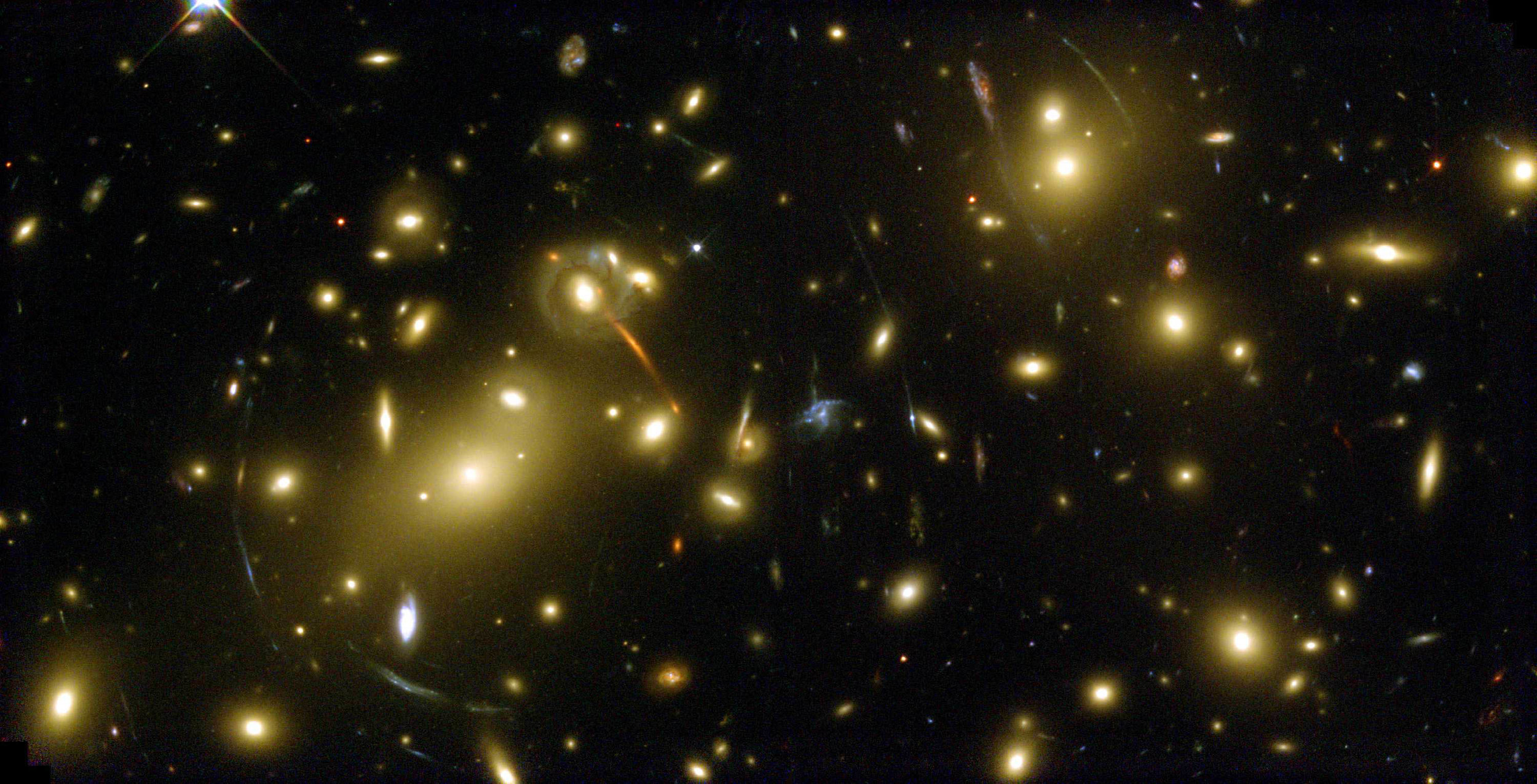
How does gravity bend the path of light? Does it seriously act like a lens or is that just a metaphor? What does it take, and how do we know? What can we learn from this strange physics? I discuss these questions and more in today’s Ask a Spaceman!
Support the show: http://www.patreon.com/pmsutter
All episodes: http://www.AskASpaceman.com
Follow on Twitter: http://www.twitter.com/PaulMattSutter
Like on Facebook: http://www.facebook.com/PaulMattSutter
Watch on YouTube: http://www.youtube.com/PaulMSutter
Go on an adventure: http://www.AstroTours.co
Keep those questions about space, science, astronomy, astrophysics, physics, and cosmology coming to #AskASpaceman for COMPLETE KNOWLEDGE OF TIME AND SPACE!
Big thanks to my top Patreon supporters this month: Justin G., Matthew K., Kevin O., Justin R., Chris C., Helge B., Tim R., SkyDiving Storm Trooper, Lars H., Khaled T., Raymond S., John F., Anilavadhanula, Mark R., and David B.!
Music by Jason Grady and Nick Bain. Thanks to WCBE Radio for hosting the recording session, Greg Mobius for producing, and Cathy Rinella for editing.
Hosted by Paul M. Sutter, astrophysicist at The Ohio State University, Chief Scientist at COSI Science Center, and the one and only Agent to the Stars (http://www.pmsutter.com).
All Episodes | Support | iTunes | Google Play | YouTube
EPISODE TRANSCRIPTION (AUTO-GENERATED)
You're at a picnic and you see an ant crawling along the blanket over all the little hills and valleys because your blanket isn't perfectly flat. The ant knows exactly where it wants to go. It sees the strawberry or the pickle sandwich, or I'm not exactly sure about what you pack for a picnic, but you get the idea. The ant thinks it's going in a straight line. It knows. It saw the strawberry in the distance, and it's going to go right for it. No hesitation. But. It's forced to follow the contours of the blanket. It has to go up, down, maybe sideways. It's making a beeline for the food, but the blanket makes it follow an ant line. Get it? No? Nobody? Okay, well, you know what? Either way, good jokes or bad jokes, you should contribute to Patreon. Go to patreon.com slash pmsutter to learn how you can keep all this outreach going. Maybe... If more people contributed to Patreon, I would be able to write better jokes. But you know what? This is all you're going to get. Actually, I'm just kidding.
All of you are incredibly generous, and I appreciate all the support. That's patreon.com slash bmzutter. The word of the day that we all need to come away from this episode with is geodesic. Geodesic. You may have heard that word before in other contexts. Like if you think about airlines and flights and the path that a flight will take, it connects one city to another. Say you're leaving from New York and you want to go to Paris. a straight line in three dimensions a straight line in three dimensions would send you in a tunnel through the earth that's not exactly feasible so instead we're going to stick to the surface of the earth and we're going to follow we're just we're going to set our compass heading and the plane is going one direction it's not going to turn left it's not going to turn right it's going to go right to paris but then when i look at that in three dimensions it's a curved path Because the plane has to follow the surface of the Earth, because it's not going to go off into space, and it's not going to start digging through the rocks and the dirt in the ocean.
It's going to follow a straight line, but the Earth is curved, so it's going to follow a kind of straight line. It's going to follow what we call a geodesic. In cartography, in flights, these are also called great circle roots. The straightest line possible. I guess the definition of geodesic. And you can extend this from thinking about just the surface of the Earth in a globe to anything. Like the ant crawling along the surface of a very complicated blanket. It may not turn left or turn right, but it still has to go up and down. It has to follow all the contours. Geodesic. A definition I like to have in my head is a line that is as straight as possible under the circumstances. A line that is as straight as possible under the circumstances. And in our universe with gravity, the discussion is all about geodesics. In the framework of general relativity, space-time itself is bent. Space-time itself is warped and flexed like a blanket at a picnic, has hills and valleys. Any source of gravity, any mass or energy causes a distortion in the fundamental fabric of space-time.
Now, it's kind of hard to imagine because that's a four-dimensional thing and our brains aren't usually equipped for thinking in four dimensions, but it's still a thing. We can use lower-dimensional analogies like blankets or like the surface of the Earth to get the point across. In general relativity, which is how we understand gravity in our universe. Space-time is warped and bent and flexed, and other objects are forced to navigate this. Other things like light are forced. Even though light would love to go in a straight line, it can only go in as straight a line as possible under the circumstances. So if space-time in a particular region is bent, light must follow that bending. So gravity... The presence of a massive object can deflect the path of light. Just like curvature in a blanket at a picnic can deflect the path of an ant trying to get to that strawberry. That must be a really good strawberry. It's worth it. This is one of the earliest predictions of general relativity and provided one of the first tests of general relativity where Einstein said, hey, light passing near the sun.
will get deflected a little. So if you look at a star, a distant star, that's very, very close to the edge of the sun, it will be in a little bit of the wrong position because the path of light from that star, as it gets close to our sun, will get tweaked just a little bit and it will go in a slightly different direction than straight. And of course, the famous 1917 Eddington expeditions led by Sir Arthur Eddington to get some photographs of stars. Usually it's hard to take a picture of a star near the sun because the sun is kind of bright. But during an eclipse, which blocks out a lot of the light from the sun, you can get those photographs. You can take some measurements of stars very, very close and you can see this effect. He saw the effect as predicted by general relativity. Yay. Instant celebrity Einstein. So gravity can bend this path of light. What else bends the path of light? Well, tons of stuff, right? In normal everyday experience, we're bending light all over the place and it's usually caused by refraction.
Light has different speeds in different stuff. So if light travels from one medium to another, like from air to water, air to glass or whatever, if it comes in at an angle, that angle will change. And I'll admit, it's super easy to blow my mind. And here's one example of where my mind gets easily blown. You take a clear glass, put some water in it, stick a straw in it, and you look through the glass at the surface of the water at the straw. The straw looks bent. where it meets the water. Even though the straw isn't bent at all, it's bent because the light coming through the air and coming through the water are different, travel at different speeds, and so it makes all the angles messed up. It looks like the straw is broken, even though it's perfectly straight. This is also why it's hard to go spearfishing. Or if you're just standing, like stand in knee-deep water and there's some fish around you and you decide to grab them, the fish is not going to be where you expect it to be because the path of light got bent coming from the water and into the air.
This is also the physics behind lenses. I'm sure many of you are incredibly familiar with lenses because you have them inside your eyes, or you might be wearing them over your eyes in the form of glasses. What will a lens do? Well, a good lens will focus, magnify, enlarge images. It will bend light in just the right way to make it very, very useful. A bad lens will not do that. If you think of what happens with a funhouse mirror or a broken glass, it will distort images because it's bending the path of light in an unuseful way. If you put a good lens between your eye and a distant object, it might be easier to see that object. It'll bend the light in a nice, friendly way. If you put a bad lens between you and a distant object, the image will get all twisted and distorted. Either way, there is a connection between what you see and what the lens is made of and how it's shaped. If you take a good lens that's magnifying an image, enlarging it, making it focus, and you break it with a hammer or you heat it up or you melt half of it, it will change how you see that image.
Or if you make it out of different material, different kinds of glass, if you sandwich two pieces of glass together or whatever, if you change what the lens is made of, you're going to change what you see. Now, does gravity, we're talking about gravitational lensing, by the way, Now, does gravity really act like a lens or is that just a metaphor? Well, it depends on the lens. It certainly doesn't act like a pair of bivocals. But if you take the base of a wine glass, this is just one of those weird coincidences in the universe. If you take a base of a wine glass and you look through that base... It's very similar to the lensing caused by a small compact spherical object. If you were to say, look at a distant black hole, and that's a source of gravity, it will bend the path of light around it. Light will be forced to take different paths around that black hole. So you'll see a very strange and odd pattern of the starlight surrounding that black hole. If you look through a base of a wine glass at the same spot, you'll see a very similar distortion.
So do it yourself. I don't recommend breaking any wine glasses. This is one of the rare times I do not recommend doing this in public. Do this in the privacy of your own home. Go find yourself the base of a wine glass and start looking through it. You'll see arcs. If you line up things just right, you'll see circles. You'll see the same image multiple times. You'll see some cool stuff. Now, in general, gravitational lenses are much, much more complicated, and we'll get into that. But you could, in principle, ask your friendly neighborhood glassblower to reconstruct any gravitational lensing situation you might see on the sky, pretty much. By varying the density, the thickness, the materials, the curvature of the glass, you could reconstruct things that I'm about to talk about, things you can see in our actual universe that are generated by gravity, which just gave me a pretty cool idea for an art science project. But that's another thing. We see gravitational lenses in the universe. We literally see them.
We have pictures of them. We usually see them in very massive systems. That's the easiest to pick out, like a giant galaxy cluster. And we see it not in the cluster itself, but with images of galaxies that are behind the cluster. Those images get distorted. At least that's the conclusion. When you see like a long, snake-like, curved, odd-shaped galaxy, it's either gravitational lensing or there's some really funky-shaped galaxies in our universe that we have no idea how they exist. You take your pick. Take your pick. Here's what you do. Look at a galaxy cluster. Galaxy cluster, by the way, is a massive, bustling metropolis. They're massive, bustling cities of a thousand or so galaxies. Very, very massive. The largest, most massive, gravitationally bound structures in the universe. They have lots of stuff. And they can act like a big, giant, honking lens. You got a lot of gravity in one place. It is going to mess with the light. It is going to mess with any light passing near or around it.
They're also very, very large compared to the galaxies that actually make up the cluster. So a thousand galaxies might live in a cluster, but the galaxies themselves are very, very small compared to the entire volume of the cluster. Like my favorite analogy, bees in a swarm or birds flocking together. If you see a flock of birds... You, of course, can see the individual birds. That's how you know it's a flock. But you can also see through them and past them in the gaps to the sky beyond. It's like that looking at a galaxy cluster. We see the members themselves. We can also look through the galaxy cluster and see a bunch of background galaxies. Galaxies that have absolutely nothing to do with the cluster. So there's a bunch of galaxies in the galaxy cluster. There's a bunch of other stuff, too, like gas and dark matter that are acting like a lens. It's exactly as if you put a giant piece of glass there. Except we're doing this with gravity, not refraction. And there's a bunch of galaxies behind the cluster that have absolutely nothing to do with it.
The light from those background galaxies will get distorted. Just like if you took a big honking piece of glass and put it up and looked at the sky, you would see a bunch of distortions in the sky. That's exactly what we see. And you can play a game. You can look at these distorted, funhouse mirror-like galaxies when you're looking through the cluster. And you can look in just an empty patch of sky with no cluster there, where it's just a whole bunch of galaxies. They're far away. There's no lens between us and those galaxies. So those galaxies look totally normal and well-behaved. Then the galaxies behind the cluster look super messed up. You can compare and contrast and do a lot of math. The easy mode answer is you get the total mass of the cluster. The expert mode answer is you can figure out the distribution of matter in the cluster. The distribution. You can figure out. This is so cool. You can figure out the contents of a galaxy cluster. One of these massive bees. Where the matter is.
What it's made of, how it's distributed, where it's concentrated, where it likes to hang out, based on how it's distorting the light from the background galaxies. Is it perfect? Of course not. There's noise. There's uncertainty. There's modeling error. It's not perfect by far, but it's pretty dang good. Just like imagine this thought experiment using real glass. Imagine we don't have gravitational lenses. We just have actual lenses, pieces of glass floating around the universe or in your room, just in your room. Like imagine someone gave you a piece of glass and you want to figure out what that glass is made of. If it's lumpy or if it's perfectly smooth, what would you do? You would hang it up and you'd look through it. And you compare, okay, I see the pattern of my wallpaper looks like that. And then when I don't look through the lens, I see that pattern of wallpaper. You could figure out what the lens is made of. I mentioned this in the dark matter episode. This is one of the best uses of these water, so-called strong gravitational lens systems, where we can really plainly see the distortion of background galaxies.
One of the best uses is, for that point to the evidence of dark matter, or the point in the direction that our universe is filled with dark matter. Because when you look at the lens system, there's no way that the stuff that lights up, the individual galaxies or the gas, can explain the lensing distortion that we see. We know that there's something else going on with clusters of galaxies because we see its effect on the light as it passes through it through gravitational lensing. We saw this with the bullet cluster. There's other examples with amusing names like the train wreck cluster. Feel free to look those up on your own or ask me and I'll do a whole show on them. This lensing effect doesn't just distort the shape of background galaxies. Just like a lens doesn't just distort the shape. It can also brighten things. It can also magnify things, just like a lens can. Why does it brighten and magnify? Well, it's because multiple rays of light can get bent and focus just like a lens does.
So instead of just a tiny portion of the light reaching us in our observatories and our telescopes from a very, very distant galaxy, some rays of light that that object is emitting that would normally never hit us, would miss us by a country mile, get bent. Their paths get bent and instead get aimed right for the Earth. So we get bonus light. We get extra light that usually wouldn't be pointed at us because of the presence of a gravitational lens. That can brighten it, that can magnify it. This is how we use to detect incredibly distant objects. The most distant galaxies and quasars are detected using this lensing technique. Normally, the most distant galaxies in our universe would be far too faint to see. We just can't see them. They're too far. They're too faint. But when we have a lucky chance, when we look through a gravitational lens, when we look through a massive thing like a cluster at an even more distant object, we get a boost. We get a brightening. We get a magnification that we normally wouldn't.
And this slingshot method, this leapfrog method, sometimes it's called this gravitational lensing method, allows us to probe the furthest reaches of our universe. There's one other application of strong lensing that's super cool. You can use it to measure the expansion of the universe. Let's say you're watching. Let's say you're watching a distant galaxy that's being lensed by a closer cluster. So you're watching this background galaxy and something happens. Changes its brightness, maybe a supernova goes off, the aliens wave hello, whatever. Something in that galaxy changes and that information is going to travel, right? The light from that galaxy is going to travel from the galaxy to us. Usually without a lensing, it would just take one path. It would just aim straight for us and that'd be it. But because of the lensing, there are multiple paths of light. Right. Multiple paths. Some some go straight through the cluster. Some go around this way. Some go up that way and then down this way and then over twist around a little bit before finally aiming to us.
They have different paths, so they have different times. The light from a distant galaxy will take different amounts of time to reach us depending on the path. Some have the fast path, some of the slow path, some of the really slow path. And if you know the brightness of something and it's traveling through different distances, you can measure the expansion of the universe. It's been used a few times. It's not like the number one technique for measuring the expansion of the universe, but it's there. It's just another thing, another piece of evidence that we live in an expanding universe. On the opposite side of the spectrum from strong lensing is something we call weak lensing, which is, as you can imagine, a little bit weaker. And to visualize this, I want you to imagine you're sitting in a giant cathedral or concert hall, just a vast room, vast open space with light that surrounds you from the edges. So they're incredibly far away. That light is incredibly far away from you on that far away wall, that far away ceiling and suspended around you in the air.
are countless individual lenses, pieces of glass, jewels. They're so tiny that you can't even see the individual ones. They're just effervescent. Like, they're hardly even there. And you can't see. It's not like you can see a distant light and it's immediately obvious that it's being lensed. It's just a super tiny effect. Well, how could you figure out the properties of these lenses? How could you figure out how many there are? What shape they are? How they're able to bend light? Well, if you knew what that distant background light looked like, you can compare it to what you see and figure out the properties of the lenses. Obviously, this would be very weak. It wouldn't be very strong, so it'd have to be a statistical analysis, not like just a raw picture. Like we have pictures of strong lensing systems where we see, oh yeah, man, that galaxy is getting totally lensed. It's totally obvious because we see that galaxy being stretched out into a long, thin arc or a ring where it's all wibbly wobbly.
That's strong lensing where it's immediately obvious in a photograph what's going on. With weak lensing, it's something else. Now, instead of looking at massive galaxy clusters, we're looking at the effects of galaxies themselves. Much smaller things, much more subtle things. Stuff where you have to do a massive survey and do some deep statistical analysis to figure out the lensing that's happening. If you take this to the extreme, we are surrounded by light on all sides. It's the cosmic microwave background. And that light... that originated 13.8 billion years ago has been filtering through the universe for those 13.8 billion years. And it's been encountering structures in our universe that light will pass by galaxies or a cluster here and there. And it will tweak. It will shift a little bit left, shift a little bit right, shift a little bit up or down. It will change. And we've been able to use the cosmic microwave background to build up a map of the total matter structure in our universe between us and that background light.
And now I know some of you may remember that when a whole deal about how the universe is homogenous and isotropic, how it looks the same in all directions and on big enough scales, the universe looks the same. But now I'm saying we're doing a technique where we're like, why should this lensing signal? Why should this subtle weak lensing from the cosmic microwave background be anything at all? Why is there signal there? Well, one is it's a super duper tiny effect, well below the scale of what we call homogeneity. The CMB itself is almost entirely uniform. One part in 10,000 is different at all. And then a tiny fraction of that actually picks up this weak lensing signature from passing through all the structure, all the universe, the stuff between us and the cosmic microwave background. Also, to make any decent lensing signal at all, you need big structures like clusters. You need walls. You need filaments of galaxies to make any decent signal. And that only comes late in cosmic evolution, which means relatively nearby.
Remember, when we're doing cosmology, the nearby galaxies... are the most recent galaxies to form. Because light takes time to travel across our universe, the further back we go, the further out we go in the universe, the further back in time we go. So the most distant galaxies that we can see don't have a lot of structure to them because it takes time for structure to evolve. We only see the cosmic web, we only see the structure of the universe in our relatively nearby patch, The further and further out we go, the further back in time we're observing and the less structured it is. So it's a relatively nearby effect that's creating this lensing signal. So looking at the lensing from the cosmic microwave background is useful and we've done it. We've totally done it. You can find maps of Planck lensing signal, for example. where that tells us something interesting about what the universe is made of and how it's organized. Just like if you had a whole collection of lenses around you, you could use the background light to figure out what those lenses are made of and how they're arranged.
We're just doing that with that whole entire universe. But that gives us one kind of information. It's the light from the cosmic microwave background projected, filtered, traveled through the entire universe. But what if you could do this in shells? What if you could break it down like onion layers? Like, we're at the center of the onion. The cosmic microwave background is that outermost dry skin, the thing you have to rip off before you start cooking. That gives us a picture of the universe, of the whole thing, but it's relatively limited. What if you could do it at onion layers? Like, what if you could take one layer at a time? What if you could look at the weak lensing signal out to one distance, say halfway to the edge, figure out what the lensing distortion is between us and that halfway distance, then go out a little bit further, just a little bit further, figure out the lensing signal, the effect of any light from that layer between that layer and us, then you could take a difference.
That difference would tell us what that layer is made of and how it's arranged. And do this multiple times, we can build out a three-dimensional picture of the universe. including the dark matter, that is absolutely essential. Because if we just want a map of the visible matter, we would just go out and count the galaxies. This gives us a measurement of the dark matter itself. And it's the galaxies themselves that are acting as the layer. So you start with one layer of galaxies at a certain distance. Say we're going to go, I don't know, 10 billion light years out. That'll be our layer. We'll look at all the galaxies at 10 billion light years out. The light from those galaxies has filtered through 10 billion light years of stuff to get to our detectors. So those galaxies, their shapes will be just a little bit different. Maybe just a little bit stretched out. Maybe just a little bit twisted. Super, super tiny thing. Very difficult to measure. Relies on statistics. This method is still in the relatively early stages, but it's potentially incredibly powerful.
If you repeat this process, okay, now not 10 billion years. Now I'm going to look at 5 billion years. Galaxies that are 5 billion light years away, I'm going to see how their images are slightly distorted. Now 6 billion years. Galaxies, calling all galaxies at 6 billion light years away, I'm going to see how your image is slightly distorted. Now 7, now 8, now 9, now 10, now 11, now 12. Layer by layer by layer, you can build out a map in principle. of the growth of structure over time. Where you can see, where you can map out how our universe has evolved in 13.8 billion years. From its very early stages where there weren't a lot of structures, where galaxies were not clumped together, to the very late stages where we have a lot of structure in our universe. Using that, you can map out what dark matter and dark energy are. Because if you change ingredients in the recipe of the universe, you get different universes. You get different growths of structure. Both of these things influence the growth of structure in our universe, both dark matter and dark energy.
And by mapping out how that structure has grown, you can figure out the properties of dark matter and dark energy. That is an incredibly powerful method. That is still in its relative infancy. We're just now getting a handle on the statistics and the methods and the detections. But upcoming missions like the Dark Energy Survey, like WFIRST, the NASA mission, like Euclid, the European Space Agency mission, this is what they're going to do. They are weak lensing missions. They are going to look for this tiny, tiny shift. in the properties of galaxies, in their images, to figure out how much stuff is between us and those distant galaxies and use that to map out the universe, even the parts that we can't see. Lensing isn't just used for cosmology. We have our strong lenses, where we look at individual galaxy clusters and we use that to crack open inside and figure out what they're made of. We have weak lensing, where we're mapping out the arrangement of galaxies on the very largest scales.
We can also hunt for much smaller things. Much, much smaller things. So small, it's called microlensing. And let's say you look at a star. You just happen to pick a random star in the sky and you stare at it long enough. If something tiny, like a brown dwarf or a black hole, passes between you and that star, that tiny thing will lens the light from that star. The light from that star will get bent just a tiny, tiny, tiny bit. Far too small and far away to see rings or an arch or a big distortion, but you will see a brief bump in the brightness. Because in that moment, in that moment where the tiny thing is perfectly aligned between you and the star that you're looking at, then the starlight, just like with strong lensing, gets to follow multiple paths to reach your eye. So instead of just getting some of the light, you get a little bit more of the light that you normally wouldn't get. Just like a lens can brighten an object, you get a bump in brightness. And you can find it. You can see it.
It allows you to detect small, dim, distant things. Just waiting for these chance alignments. That's all it takes. I mean, it's super rare, to say the least, for one of these chance alignments to happen. But if you stare at enough of the sky long enough, it's bound to happen. In fact, we have seen it. We have detections of these kinds of events. They're very, very brief. They're like jewels glinting in the sunlight. But it allows us to look for small black holes, brown dwarfs, rogue planets, just all the stuff that doesn't necessarily glow brightly that's floating around the universe. More specifically, our galaxy, because stars in other galaxies are too far away for this to apply. But we can do it nearby. We can do it in our own galaxy. And we can use it to hunt for planets. If you're staring at one star... and another star passes in your line of sight, then that other star will cause a lensing event. You'll get a temporary moment of brightness from that background star. If the star that's between us and the one we're looking at has a planet in orbit around it, then it will have a slightly different lens.
It's like a lens with a small imperfection in it. And the event, the microlensing event, will look a little bit different. The brightness pattern will not look the same during that event. And it's enough. It's different enough that you can tell it apart. You can tell that the star you're using as a lens to look at a very far background star has a flaw in it, has an imperfection, has a little bit of extra weight where it shouldn't. And that's the signal of a planet. And we've actually done this. We've been able to use it to find planets. And it will become the number one planet detection method by far in the next decade. The NASA WFIRST mission that I mentioned that's going to be a weak lensing survey of galaxies to do cosmology. Well, it's doing lensing anyway. It's going to hunt for planets. It's going to hunt for planets using exactly this technique, and we expect to find millions of planets. Because this mission can stare at so many stars for so long, it will see countless chance alignments, and it will capture planet after planet after planet.
So that's how powerful gravitational lensing is. We can use it for strong lensing to peek inside galaxy clusters. We can use weak lensing to map structures in our universe. And we can use micro lensing to find even planets. Just like if we had a set of glass lenses. scattered throughout our universe. We can use it to figure out what those glass lenses are made of, what the stuff behind them are made of, what our universe itself is made of. Thank you very much. Thank you also to my top Patreon contributors this month, Justin G, Matthew K, Kevin O, Justin R, Chris C, and Helgen B. You too can contribute. Go to patreon.com slash pmsutter to learn more. And of course, go to astrotours.com. I'd love to see you on a fantastic trip to a fabulous part of a faraway and exotic land. And also, why don't you join me for Space Radio? That's our weekly radio show here at WCB, spaceradioshow.com. You can send more questions to hashtag AskASpaceman on Twitter and Facebook. Follow me directly. I'm at Paul Matt Sutter on those venues.
You can also email AskASpaceman at gmail.com. Visit AskASpaceman.com for all the show notes and everything. And there's a place to question, blah, blah, blah. You know the deal. I'll see you next time for more Complete Knowledge of Time and Space.


